%22%20fill%3D%22rgb(0%2C0%2C0)%22%20d%3D%22M%201708.71%2032.0719%20L%201711.17%2032.1726%20L%201711.48%2033.8726%20C%201698.63%2068.7557%201678.15%20111.062%201663.25%20146.038%20L%201610.27%20270.222%20C%201600.68%20293.044%201548.56%20422.248%201540.04%20431.57%20C%201533.67%20438.547%201128.18%20599.98%201082.51%20618.503%20L%20896.13%20695.087%20C%20861.529%20708.971%20827.042%20723.139%20792.674%20737.591%20C%20773.372%20745.745%20749.086%20754.449%20732.134%20766.537%20C%20692.666%20794.684%20697.752%20841.911%20698.601%20884.356%20C%20699.702%20939.367%20740.841%20953.958%20782.454%20976.677%20L%20861.67%201020.18%20L%201099.89%201152.37%20C%201107.22%201156.5%201119.88%201164.35%201127.14%201167.58%20C%201169.86%201186.61%201146.74%201195.41%201117.9%201208.29%20C%201100.37%201216.11%201079.03%201225.42%201060.64%201233.58%20C%201010.18%201256.26%20959.538%201278.54%20908.726%201300.43%20C%20894.529%201306.71%20881.754%201312.22%20867.258%201317.69%20C%20862.804%201316.04%20858.4%201314.27%20854.051%201312.36%20C%20836.181%201304.32%20811.094%201289.47%20793.048%201279.86%20L%20667.457%201213.33%20L%20559.157%201156.4%20C%20524.558%201137.94%20487.124%201123.47%20472.687%201083.79%20C%20469.558%201074.97%20467.621%201065.77%20466.927%201056.43%20C%20465.765%201038.59%20466.66%201011.98%20466.668%20993.332%20L%20466.359%20873.615%20C%20465.984%20815.652%20463.947%20757.728%20465.485%20699.747%20C%20465.795%20688.052%20466.054%20675.662%20467.175%20664.054%20C%20469.31%20640.858%20475.406%20618.2%20485.2%20597.064%20C%20517.254%20527.676%20568.707%20508.151%20633.929%20480.324%20L%20726.507%20441.167%20L%201040.13%20310.018%20L%201452.31%20137.782%20L%201616.93%2069.4204%20C%201646.93%2057.0612%201678.5%2043.152%201708.71%2032.0719%20z%22%2F%3E%0D%0A%3Cpath%20transform%3D%22translate(0%2C0)%22%20fill%3D%22rgb(0%2C0%2C0)%22%20d%3D%22M%201180.36%20731.182%20C%201195.24%20733.945%201233.7%20756.876%201248.98%20765.026%20L%201364.16%20826.126%20L%201484.37%20889.381%20C%201498.57%20896.955%201532.42%20914.303%201544.52%20923.261%20C%201557.39%20932.823%201567.44%20945.681%201573.6%20960.477%20C%201577.74%20970.613%201580.28%20981.333%201581.12%20992.25%20C%201582.2%201006.88%201581.3%201032.21%201581.31%201047.95%20L%201581.63%201160.97%20C%201582.26%201211.62%201582.57%201262.29%201582.57%201312.95%20C%201582.44%201333.48%201582.84%201362.18%201581%201382.38%20C%201579.14%201403.66%201573.97%201424.53%201565.69%201444.23%20C%201551.08%201479.78%201525.53%201509.75%201492.74%201529.79%20C%201460.17%201549.9%201412.55%201568.06%201376.2%201583.68%20C%201297.89%201617.01%201219.4%201649.9%201140.72%201682.34%20L%20334.313%202018.15%20C%20339.936%202006.05%20344.516%201995.06%20349.5%201982.67%20C%20380.898%201908.42%20413.985%201834.57%20445.11%201760.02%20C%20459.052%201725.94%20473.375%201692.02%20488.076%201658.26%20C%20492.996%201647.05%20502.305%201624.37%20508.527%201614.93%20C%20525.371%201606.59%20557.563%201594.41%20575.732%201586.98%20L%20705.864%201534%20C%20845.58%201478.27%20984.961%201421.71%201124%201364.32%20L%201246.78%201313.94%20C%201290.4%201295.55%201343.27%201280.12%201348.5%201224.17%20C%201350.49%201202.85%201351.54%201164.6%201346.69%201143.96%20C%201344.6%201134.87%201340.77%201126.27%201335.41%201118.63%20C%201321.45%201099.1%201289.07%201084.29%201267.79%201072.67%20L%201188.51%201029.14%20L%20997.495%20923.267%20L%20933.233%20887.54%20C%20924.86%20882.894%20890.238%20867.795%20898.045%20858.391%20C%20907.874%20846.549%20953.243%20829.416%20967.235%20823.263%20L%201064.01%20780.291%20C%201087.5%20769.837%201111.05%20759.524%201134.65%20749.351%20C%201147.99%20743.555%201166.91%20734.741%201180.36%20731.182%20z%22%2F%3E%0D%0A%3C%2Fsvg%3E)
%22%20fill%3D%22rgb(255%2C255%2C255)%22%20d%3D%22M%201708.71%2032.0719%20L%201711.17%2032.1726%20L%201711.48%2033.8726%20C%201698.63%2068.7557%201678.15%20111.062%201663.25%20146.038%20L%201610.27%20270.222%20C%201600.68%20293.044%201548.56%20422.248%201540.04%20431.57%20C%201533.67%20438.547%201128.18%20599.98%201082.51%20618.503%20L%20896.13%20695.087%20C%20861.529%20708.971%20827.042%20723.139%20792.674%20737.591%20C%20773.372%20745.745%20749.086%20754.449%20732.134%20766.537%20C%20692.666%20794.684%20697.752%20841.911%20698.601%20884.356%20C%20699.702%20939.367%20740.841%20953.958%20782.454%20976.677%20L%20861.67%201020.18%20L%201099.89%201152.37%20C%201107.22%201156.5%201119.88%201164.35%201127.14%201167.58%20C%201169.86%201186.61%201146.74%201195.41%201117.9%201208.29%20C%201100.37%201216.11%201079.03%201225.42%201060.64%201233.58%20C%201010.18%201256.26%20959.538%201278.54%20908.726%201300.43%20C%20894.529%201306.71%20881.754%201312.22%20867.258%201317.69%20C%20862.804%201316.04%20858.4%201314.27%20854.051%201312.36%20C%20836.181%201304.32%20811.094%201289.47%20793.048%201279.86%20L%20667.457%201213.33%20L%20559.157%201156.4%20C%20524.558%201137.94%20487.124%201123.47%20472.687%201083.79%20C%20469.558%201074.97%20467.621%201065.77%20466.927%201056.43%20C%20465.765%201038.59%20466.66%201011.98%20466.668%20993.332%20L%20466.359%20873.615%20C%20465.984%20815.652%20463.947%20757.728%20465.485%20699.747%20C%20465.795%20688.052%20466.054%20675.662%20467.175%20664.054%20C%20469.31%20640.858%20475.406%20618.2%20485.2%20597.064%20C%20517.254%20527.676%20568.707%20508.151%20633.929%20480.324%20L%20726.507%20441.167%20L%201040.13%20310.018%20L%201452.31%20137.782%20L%201616.93%2069.4204%20C%201646.93%2057.0612%201678.5%2043.152%201708.71%2032.0719%20z%22%2F%3E%0D%0A%3Cpath%20transform%3D%22translate(0%2C0)%22%20fill%3D%22rgb(255%2C255%2C255)%22%20d%3D%22M%201180.36%20731.182%20C%201195.24%20733.945%201233.7%20756.876%201248.98%20765.026%20L%201364.16%20826.126%20L%201484.37%20889.381%20C%201498.57%20896.955%201532.42%20914.303%201544.52%20923.261%20C%201557.39%20932.823%201567.44%20945.681%201573.6%20960.477%20C%201577.74%20970.613%201580.28%20981.333%201581.12%20992.25%20C%201582.2%201006.88%201581.3%201032.21%201581.31%201047.95%20L%201581.63%201160.97%20C%201582.26%201211.62%201582.57%201262.29%201582.57%201312.95%20C%201582.44%201333.48%201582.84%201362.18%201581%201382.38%20C%201579.14%201403.66%201573.97%201424.53%201565.69%201444.23%20C%201551.08%201479.78%201525.53%201509.75%201492.74%201529.79%20C%201460.17%201549.9%201412.55%201568.06%201376.2%201583.68%20C%201297.89%201617.01%201219.4%201649.9%201140.72%201682.34%20L%20334.313%202018.15%20C%20339.936%202006.05%20344.516%201995.06%20349.5%201982.67%20C%20380.898%201908.42%20413.985%201834.57%20445.11%201760.02%20C%20459.052%201725.94%20473.375%201692.02%20488.076%201658.26%20C%20492.996%201647.05%20502.305%201624.37%20508.527%201614.93%20C%20525.371%201606.59%20557.563%201594.41%20575.732%201586.98%20L%20705.864%201534%20C%20845.58%201478.27%20984.961%201421.71%201124%201364.32%20L%201246.78%201313.94%20C%201290.4%201295.55%201343.27%201280.12%201348.5%201224.17%20C%201350.49%201202.85%201351.54%201164.6%201346.69%201143.96%20C%201344.6%201134.87%201340.77%201126.27%201335.41%201118.63%20C%201321.45%201099.1%201289.07%201084.29%201267.79%201072.67%20L%201188.51%201029.14%20L%20997.495%20923.267%20L%20933.233%20887.54%20C%20924.86%20882.894%20890.238%20867.795%20898.045%20858.391%20C%20907.874%20846.549%20953.243%20829.416%20967.235%20823.263%20L%201064.01%20780.291%20C%201087.5%20769.837%201111.05%20759.524%201134.65%20749.351%20C%201147.99%20743.555%201166.91%20734.741%201180.36%20731.182%20z%22%2F%3E%0D%0A%3C%2Fsvg%3E)

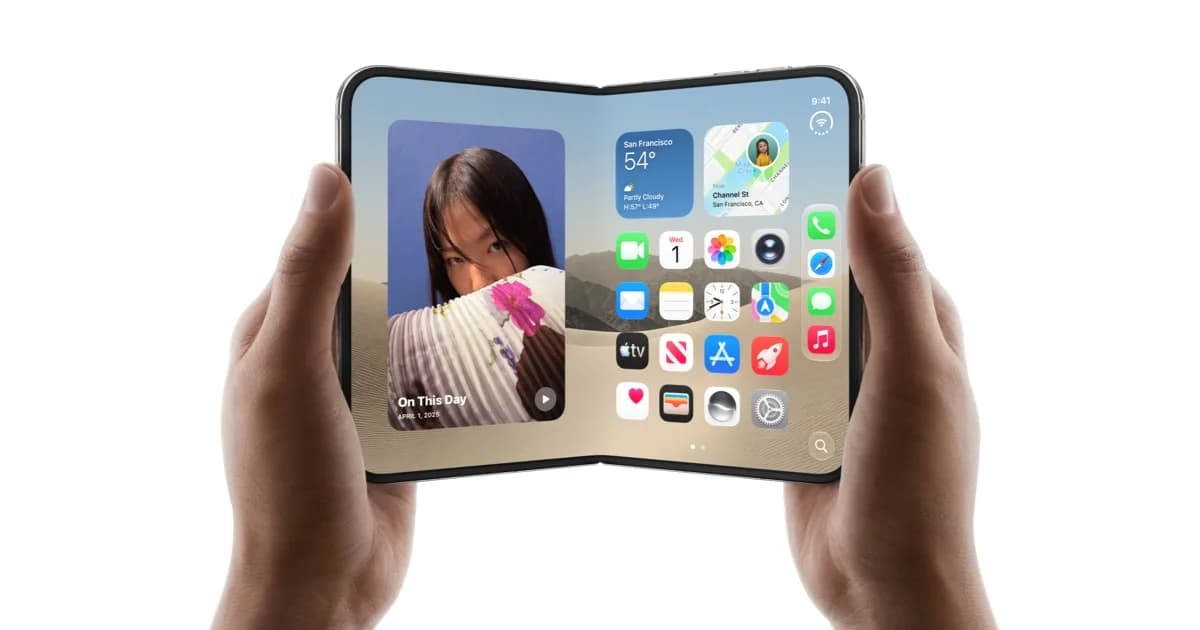
John Ternus led his first keynote as Apple's CEO on September 9, eight days after taking over from Tim Cook. The centerpiece was iPhone Duo, the company's first-ever foldable iPhone, priced at $1,999, which Ternus called "the most transformational change to iPhone since the original." When we wrote about him taking the job, the thesis was: a hardware engineer just got handed a company whose real problem sits in software and AI. This keynote is the first hard test of that thesis, and the result is mixed.
What actually shipped
iPhone Duo opens like a book, with a 5.4-inch outer display and a 7.6-inch inner one, starting at $1,999 for the 256GB version, with the top storage tier reportedly reaching $3,000. The iPhone 18 Pro starts at $1,199, the Pro Max at $1,299, $100 more than last year, with a variable-aperture main camera, a smaller Dynamic Island, and Apple's new C2 modem. The company isn't shipping a standard iPhone 18 this year: the entire fall lineup is Pro, Pro Max, and Duo. Apple Watch Series 12 starts at $399, with a ceramic case option and a new day-summary feature built on ambient sensing; Ultra 4 starts at $799 with longer battery life; AirPods 5 cost $129. Preorders opened September 12, the phones go on sale September 18, and iOS 27 lands on devices September 14.
A decade of work on a single crease
Both of Duo's screens, the 5.4-inch outer and 7.6-inch inner, are Super Retina XDR OLED panels with up to 120Hz refresh and up to 3,000 nits of outdoor brightness. The inner display got a matte, nano-texture coating that doesn't eliminate the crease running down the middle of the screen but genuinely makes it harder to notice during normal use. The frame and hinge cover are Grade 5 titanium, the front is protected by Ceramic Shield 2, three times more scratch-resistant than the previous generation, and the whole device carries an IP68 water and dust rating. Those are exactly the four problems, crease visibility, hinge durability, flexible inner-screen glass, and an under-display camera, that Apple's engineers had been working on since roughly 2016, when serious development on the project began.
Who actually drove the project is its own interesting wrinkle. By most accounts, it wasn't Ternus but Tim Cook himself, better known for managing finances and the supply chain than for product design, who spent a decade as the loudest internal champion of a foldable iPhone. Cook reportedly came back from a trip to Asia around 2020 "unusually energized" by the growing number of people using Samsung's and Huawei's foldable phones, and he's the one who pushed Apple to make a foldable iPhone rather than a foldable tablet the priority. Duo, the product that opens the Ternus era, is genuinely a decade-long personal project of his predecessor's.
Ternus reframed the AI question instead of answering it
Rather than competing directly with Google or OpenAI on raw model capability, Ternus argued the iPhone is the best personal AI device precisely because Apple controls the hardware, the operating system, and the user's data all at once. It's a deft reframe: a company losing the benchmark race shifts the conversation to integration and privacy, the ground where it genuinely does hold an edge. Apple Intelligence and the new Siri AI were already shown back in June at WWDC; September's event was mostly about productizing those announcements into real hardware, not a new leap in capability.
Analysts split exactly the way you'd expect
Dan Ives of Wedbush called Duo the first Apple product in a decade that could genuinely "move the needle" and kick off a broader innovation cycle at the company. Gene Munster of Deepwater Asset Management doubled his estimate of Duo's share of iPhone revenue for fiscal year 2027, from 5% to 10%. Jefferies went the other way, keeping its "Underperform" rating and $263.66 price target. Hardware analyst Patrick Moorhead put the skepticism most bluntly, admitting he can't watch an Apple keynote anymore without comparing it to an Nvidia presentation, the company that genuinely defines what an AI conversation in tech looks like today. The stock market split the difference: Apple shares closed the day at $315.34, down 0.28%.
The real pricing story lives inside the RAM chip
The $100 bump on iPhone 18 Pro and the $1,999 price on Duo didn't come from greed, they came from the same crisis that pushed Nintendo Switch 2's price to $500 three weeks earlier. The 12GB DRAM package inside an iPhone 18 Pro now costs roughly $145, up from about $39 in the iPhone 17 Pro, a 272% year-over-year jump. The phone's total bill of materials rose nearly 38%, and TrendForce analysts estimate DRAM alone will reach 42% of the bill of materials by the first half of 2027. On Duo, Apple is knowingly eating part of its own margin to keep the price competitive with Samsung's foldables, which start in a similar $1,900-2,100 range. That's the result of a global memory shortage hitting every consumer electronics maker at once, from Nintendo to Apple, not a decision born purely out of design ambition.
The missing standard iPhone is its own strategic call
Skipping a standard iPhone 18 this cycle isn't a production-calendar accident. Per Bloomberg's Mark Gurman, the standard iPhone 18, a new 18e model, and an iPhone Air 2 aren't landing until spring 2027. Apple is stretching its annual launch cycle into two separate moments: the priciest, most prestigious models in the fall, the rest of the lineup for less affluent buyers in the spring. That solves one problem, spreading pressure on the memory supply chain over time, but creates another: buyers looking for a cheaper iPhone will now wait longer than ever.
It's worth remembering that this keynote's star product isn't even Ternus's own idea. Duo is Cook's legacy, a decade of his personal insistence that Ternus simply delivered on time for his first conference. That doesn't diminish the execution, since landing a complicated, multi-year hardware project without slipping is its own skill, but it means the real test of Ternus's own vision is still ahead of him, not behind him.
The thesis from the day Ternus took the job hasn't changed, it's just gotten sharper. The September 9 keynote demonstrated exactly the skills expected of him: a real, physical product, the first foldable iPhone after years of speculation, built solidly and priced deliberately against the competition rather than rushed out. That's exactly what a hardware engineer with twenty-five years at Apple should be good at, and he was.
On the AI question, Ternus didn't answer it directly, he changed its terms. The argument about controlling hardware, software, and data is true and genuinely sets Apple apart from the competition, but it isn't an answer to whether Siri AI matches the capabilities of models OpenAI and Anthropic were announcing that same week. Moorhead's Nvidia comparison lands: this is still a keynote about devices, not about the intelligence those devices are supposed to run.
The most interesting thread in this launch isn't the phone itself, it's that the DRAM crisis forced Apple into a business decision it hasn't had to make in a long time: knowingly sacrificing margin to hold a competitive price. We saw the exact same mechanism at Nintendo three weeks earlier, except Nintendo passed the entire cost to the customer, while Apple absorbed part of it itself. That says more about the difference in market position between the two companies than any spec shown on stage.
Comments
Discussion
Join the conversation around this story.
Join the discussion
Sign in to comment and reply to other readers.
Sign inNo comments yet
Start the discussion first.