%22%20fill%3D%22rgb(0%2C0%2C0)%22%20d%3D%22M%201708.71%2032.0719%20L%201711.17%2032.1726%20L%201711.48%2033.8726%20C%201698.63%2068.7557%201678.15%20111.062%201663.25%20146.038%20L%201610.27%20270.222%20C%201600.68%20293.044%201548.56%20422.248%201540.04%20431.57%20C%201533.67%20438.547%201128.18%20599.98%201082.51%20618.503%20L%20896.13%20695.087%20C%20861.529%20708.971%20827.042%20723.139%20792.674%20737.591%20C%20773.372%20745.745%20749.086%20754.449%20732.134%20766.537%20C%20692.666%20794.684%20697.752%20841.911%20698.601%20884.356%20C%20699.702%20939.367%20740.841%20953.958%20782.454%20976.677%20L%20861.67%201020.18%20L%201099.89%201152.37%20C%201107.22%201156.5%201119.88%201164.35%201127.14%201167.58%20C%201169.86%201186.61%201146.74%201195.41%201117.9%201208.29%20C%201100.37%201216.11%201079.03%201225.42%201060.64%201233.58%20C%201010.18%201256.26%20959.538%201278.54%20908.726%201300.43%20C%20894.529%201306.71%20881.754%201312.22%20867.258%201317.69%20C%20862.804%201316.04%20858.4%201314.27%20854.051%201312.36%20C%20836.181%201304.32%20811.094%201289.47%20793.048%201279.86%20L%20667.457%201213.33%20L%20559.157%201156.4%20C%20524.558%201137.94%20487.124%201123.47%20472.687%201083.79%20C%20469.558%201074.97%20467.621%201065.77%20466.927%201056.43%20C%20465.765%201038.59%20466.66%201011.98%20466.668%20993.332%20L%20466.359%20873.615%20C%20465.984%20815.652%20463.947%20757.728%20465.485%20699.747%20C%20465.795%20688.052%20466.054%20675.662%20467.175%20664.054%20C%20469.31%20640.858%20475.406%20618.2%20485.2%20597.064%20C%20517.254%20527.676%20568.707%20508.151%20633.929%20480.324%20L%20726.507%20441.167%20L%201040.13%20310.018%20L%201452.31%20137.782%20L%201616.93%2069.4204%20C%201646.93%2057.0612%201678.5%2043.152%201708.71%2032.0719%20z%22%2F%3E%0D%0A%3Cpath%20transform%3D%22translate(0%2C0)%22%20fill%3D%22rgb(0%2C0%2C0)%22%20d%3D%22M%201180.36%20731.182%20C%201195.24%20733.945%201233.7%20756.876%201248.98%20765.026%20L%201364.16%20826.126%20L%201484.37%20889.381%20C%201498.57%20896.955%201532.42%20914.303%201544.52%20923.261%20C%201557.39%20932.823%201567.44%20945.681%201573.6%20960.477%20C%201577.74%20970.613%201580.28%20981.333%201581.12%20992.25%20C%201582.2%201006.88%201581.3%201032.21%201581.31%201047.95%20L%201581.63%201160.97%20C%201582.26%201211.62%201582.57%201262.29%201582.57%201312.95%20C%201582.44%201333.48%201582.84%201362.18%201581%201382.38%20C%201579.14%201403.66%201573.97%201424.53%201565.69%201444.23%20C%201551.08%201479.78%201525.53%201509.75%201492.74%201529.79%20C%201460.17%201549.9%201412.55%201568.06%201376.2%201583.68%20C%201297.89%201617.01%201219.4%201649.9%201140.72%201682.34%20L%20334.313%202018.15%20C%20339.936%202006.05%20344.516%201995.06%20349.5%201982.67%20C%20380.898%201908.42%20413.985%201834.57%20445.11%201760.02%20C%20459.052%201725.94%20473.375%201692.02%20488.076%201658.26%20C%20492.996%201647.05%20502.305%201624.37%20508.527%201614.93%20C%20525.371%201606.59%20557.563%201594.41%20575.732%201586.98%20L%20705.864%201534%20C%20845.58%201478.27%20984.961%201421.71%201124%201364.32%20L%201246.78%201313.94%20C%201290.4%201295.55%201343.27%201280.12%201348.5%201224.17%20C%201350.49%201202.85%201351.54%201164.6%201346.69%201143.96%20C%201344.6%201134.87%201340.77%201126.27%201335.41%201118.63%20C%201321.45%201099.1%201289.07%201084.29%201267.79%201072.67%20L%201188.51%201029.14%20L%20997.495%20923.267%20L%20933.233%20887.54%20C%20924.86%20882.894%20890.238%20867.795%20898.045%20858.391%20C%20907.874%20846.549%20953.243%20829.416%20967.235%20823.263%20L%201064.01%20780.291%20C%201087.5%20769.837%201111.05%20759.524%201134.65%20749.351%20C%201147.99%20743.555%201166.91%20734.741%201180.36%20731.182%20z%22%2F%3E%0D%0A%3C%2Fsvg%3E)
%22%20fill%3D%22rgb(255%2C255%2C255)%22%20d%3D%22M%201708.71%2032.0719%20L%201711.17%2032.1726%20L%201711.48%2033.8726%20C%201698.63%2068.7557%201678.15%20111.062%201663.25%20146.038%20L%201610.27%20270.222%20C%201600.68%20293.044%201548.56%20422.248%201540.04%20431.57%20C%201533.67%20438.547%201128.18%20599.98%201082.51%20618.503%20L%20896.13%20695.087%20C%20861.529%20708.971%20827.042%20723.139%20792.674%20737.591%20C%20773.372%20745.745%20749.086%20754.449%20732.134%20766.537%20C%20692.666%20794.684%20697.752%20841.911%20698.601%20884.356%20C%20699.702%20939.367%20740.841%20953.958%20782.454%20976.677%20L%20861.67%201020.18%20L%201099.89%201152.37%20C%201107.22%201156.5%201119.88%201164.35%201127.14%201167.58%20C%201169.86%201186.61%201146.74%201195.41%201117.9%201208.29%20C%201100.37%201216.11%201079.03%201225.42%201060.64%201233.58%20C%201010.18%201256.26%20959.538%201278.54%20908.726%201300.43%20C%20894.529%201306.71%20881.754%201312.22%20867.258%201317.69%20C%20862.804%201316.04%20858.4%201314.27%20854.051%201312.36%20C%20836.181%201304.32%20811.094%201289.47%20793.048%201279.86%20L%20667.457%201213.33%20L%20559.157%201156.4%20C%20524.558%201137.94%20487.124%201123.47%20472.687%201083.79%20C%20469.558%201074.97%20467.621%201065.77%20466.927%201056.43%20C%20465.765%201038.59%20466.66%201011.98%20466.668%20993.332%20L%20466.359%20873.615%20C%20465.984%20815.652%20463.947%20757.728%20465.485%20699.747%20C%20465.795%20688.052%20466.054%20675.662%20467.175%20664.054%20C%20469.31%20640.858%20475.406%20618.2%20485.2%20597.064%20C%20517.254%20527.676%20568.707%20508.151%20633.929%20480.324%20L%20726.507%20441.167%20L%201040.13%20310.018%20L%201452.31%20137.782%20L%201616.93%2069.4204%20C%201646.93%2057.0612%201678.5%2043.152%201708.71%2032.0719%20z%22%2F%3E%0D%0A%3Cpath%20transform%3D%22translate(0%2C0)%22%20fill%3D%22rgb(255%2C255%2C255)%22%20d%3D%22M%201180.36%20731.182%20C%201195.24%20733.945%201233.7%20756.876%201248.98%20765.026%20L%201364.16%20826.126%20L%201484.37%20889.381%20C%201498.57%20896.955%201532.42%20914.303%201544.52%20923.261%20C%201557.39%20932.823%201567.44%20945.681%201573.6%20960.477%20C%201577.74%20970.613%201580.28%20981.333%201581.12%20992.25%20C%201582.2%201006.88%201581.3%201032.21%201581.31%201047.95%20L%201581.63%201160.97%20C%201582.26%201211.62%201582.57%201262.29%201582.57%201312.95%20C%201582.44%201333.48%201582.84%201362.18%201581%201382.38%20C%201579.14%201403.66%201573.97%201424.53%201565.69%201444.23%20C%201551.08%201479.78%201525.53%201509.75%201492.74%201529.79%20C%201460.17%201549.9%201412.55%201568.06%201376.2%201583.68%20C%201297.89%201617.01%201219.4%201649.9%201140.72%201682.34%20L%20334.313%202018.15%20C%20339.936%202006.05%20344.516%201995.06%20349.5%201982.67%20C%20380.898%201908.42%20413.985%201834.57%20445.11%201760.02%20C%20459.052%201725.94%20473.375%201692.02%20488.076%201658.26%20C%20492.996%201647.05%20502.305%201624.37%20508.527%201614.93%20C%20525.371%201606.59%20557.563%201594.41%20575.732%201586.98%20L%20705.864%201534%20C%20845.58%201478.27%20984.961%201421.71%201124%201364.32%20L%201246.78%201313.94%20C%201290.4%201295.55%201343.27%201280.12%201348.5%201224.17%20C%201350.49%201202.85%201351.54%201164.6%201346.69%201143.96%20C%201344.6%201134.87%201340.77%201126.27%201335.41%201118.63%20C%201321.45%201099.1%201289.07%201084.29%201267.79%201072.67%20L%201188.51%201029.14%20L%20997.495%20923.267%20L%20933.233%20887.54%20C%20924.86%20882.894%20890.238%20867.795%20898.045%20858.391%20C%20907.874%20846.549%20953.243%20829.416%20967.235%20823.263%20L%201064.01%20780.291%20C%201087.5%20769.837%201111.05%20759.524%201134.65%20749.351%20C%201147.99%20743.555%201166.91%20734.741%201180.36%20731.182%20z%22%2F%3E%0D%0A%3C%2Fsvg%3E)

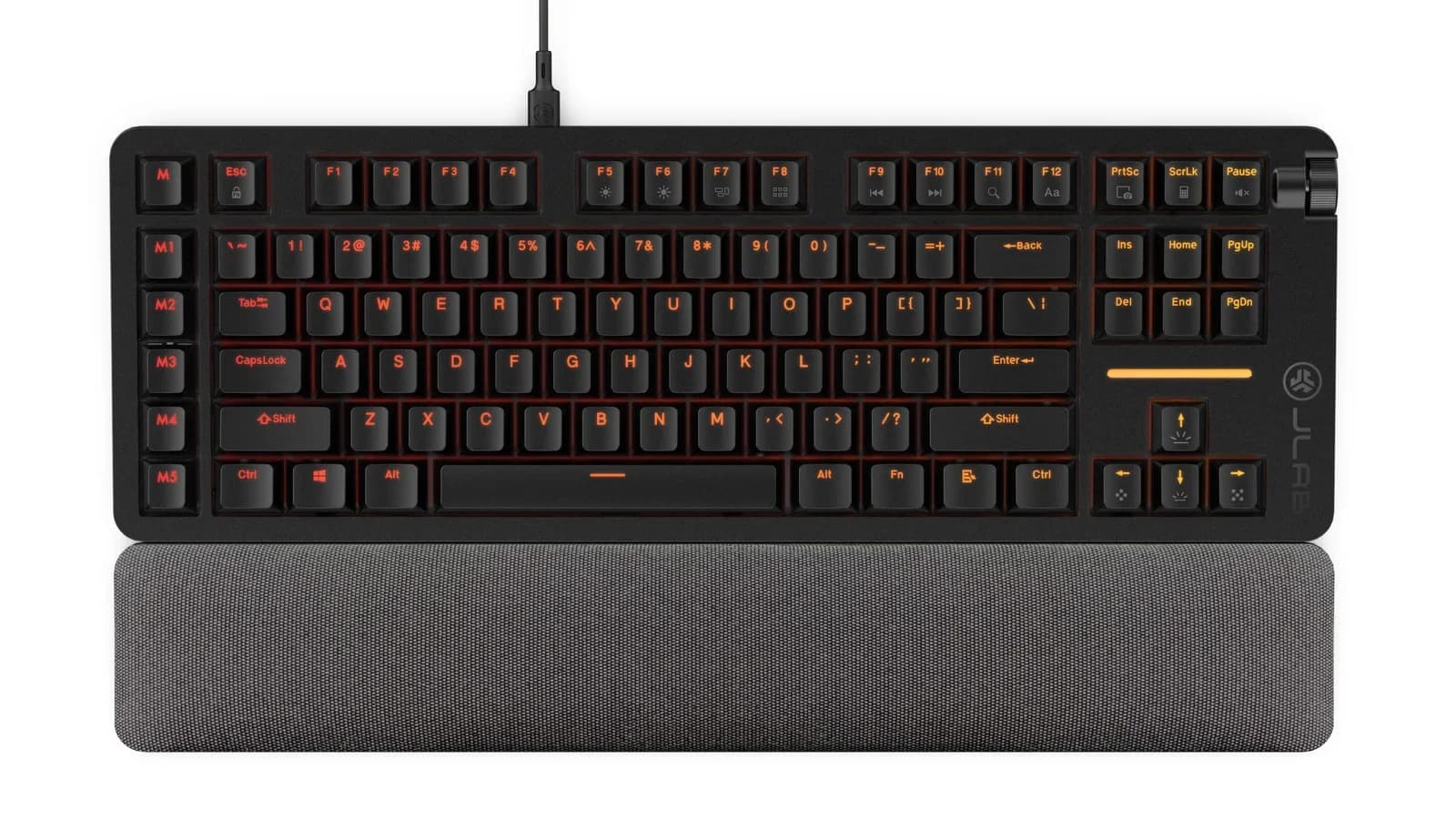
Magnetic switches, Rapid Trigger, 8000 Hz and a volume dial: $150 at launch, and $209 in the manufacturer's store today. The spec sheet makes the JLab Daybreak TKL sound like a keyboard built to embarrass pricier rivals, yet the first thing you notice after plugging it in is a backlight that doesn't glow evenly. You can see it at a glance, no measurement needed. That is the whole keyboard in miniature: it types beautifully and sounds great, and its value is decided by small finishing flaws and a price that puts it in a league JLab hasn't grown into yet.
Typing and sound: where the Daybreak wins outright
Start with what matters most in any keyboard. The typing feel is very good. Travel on the magnetic switches is smooth and controlled, and the double-shot PBT keycaps, textured and printed on a separate layer so legends won't wear off under your fingers, add to the impression of a step-up product. The sound deserves its own praise: keys sound deep and pleasant, and that is a quality no software update can add to a magnetic board.
JLab doesn't say which switches it uses. There is no model name and no manufacturer on the product page, and with a magnetic keyboard that is the first question anyone asks: how durable are they, can they be replaced, who makes them. The advertised actuation range is 0.2 to 3.8 mm, adjustable per key, which is standard for the category. Staying silent about the switches leaves a gap that manufacturers usually fill by boasting about their own design.
The backlight: a flaw you see within a minute
This is where the Daybreak loses the most points, over a detail that shouldn't happen on a keyboard at this price. The keys are not lit evenly: some glow noticeably brighter than others, and against dark keycaps the difference stands out. You don't need a colorimeter, just turn off the room light.
In our view this is the most irritating fault of the keyboard, because it spoils the first impression of a product whose selling point is supposed to be step-up build quality. Even LED output is basic quality control. If RGB matters to you, check this before buying, because it is unlikely to be something a software update can fix.
The chassis: plastic that passes for aluminum rather well
The chassis is plastic, and so is the top cover. Some write-ups online mention a metal top plate, but it is plastic: black, matte, with a texture that gives the impression of anodized metal. The quality of the material is good. Despite being plastic, the keyboard doesn't flex and doesn't feel like a cheap toy.
The plastic still has a price in another sense. At this money many players expect aluminum, and JLab sells the Daybreak as a step-up product. Good as it is, the material places the keyboard a class below the aluminum cases that, according to market roundups, already show up around $100 among budget magnetic keyboards. The box includes a soft fabric wrist rest, but it doesn't attach to the body magnetically and sits loose.
Features: Rapid Trigger, Snap Tap and macro keys
The feature list is complete. Rapid Trigger resets a key the moment you lift your finger instead of waiting for it to pass the actuation point. Snap Tap (SOCD) resolves conflicting opposite directions, Rap Tap gives priority to one of two keys pressed together, and Dynamic Keystroke lets you assign up to four different actions to a single key. On top of that comes 8000 Hz polling with roughly 1 ms latency. If you wonder whether such a high rate matters to the average player, we broke that down in our 8000 Hz guide.
On the left sits a column of five dedicated macro keys (M1 to M5), and on the right a dial with a distinct click that is as useful for volume at work as in games. The USB-C cable is detachable and braided, and the keyboard itself has a USB-C passthrough port, so a mouse or flash drive connects without reaching behind the PC. The adjustable feet have three height levels. It is all sensible and it works, and the macro keys are an extra that earns its place more often than the gaming label suggests.
TKL layout and compatibility
The layout is TKL, meaning no numpad, a reasonable trade for players who want more room for the mouse. Anyone who works in spreadsheets or types many numbers will need another solution. The Daybreak runs on Windows 10 and later, macOS, Chrome OS, Android and iOS, and lighting can be synced through Windows 11's RGB controls. That is wide compatibility for a wired-only keyboard.
Software: a beta you can still feel
Configuration happens in JLab's Lab app, which carries a beta label. It shows in small things: macro recording can be unreliable, with some recorded sequences failing or playing back differently than recorded, and the interface doesn't scale when the window is stretched to full screen. The app stores up to five profiles and lets you assign actions to keys, but polish is not its strength.
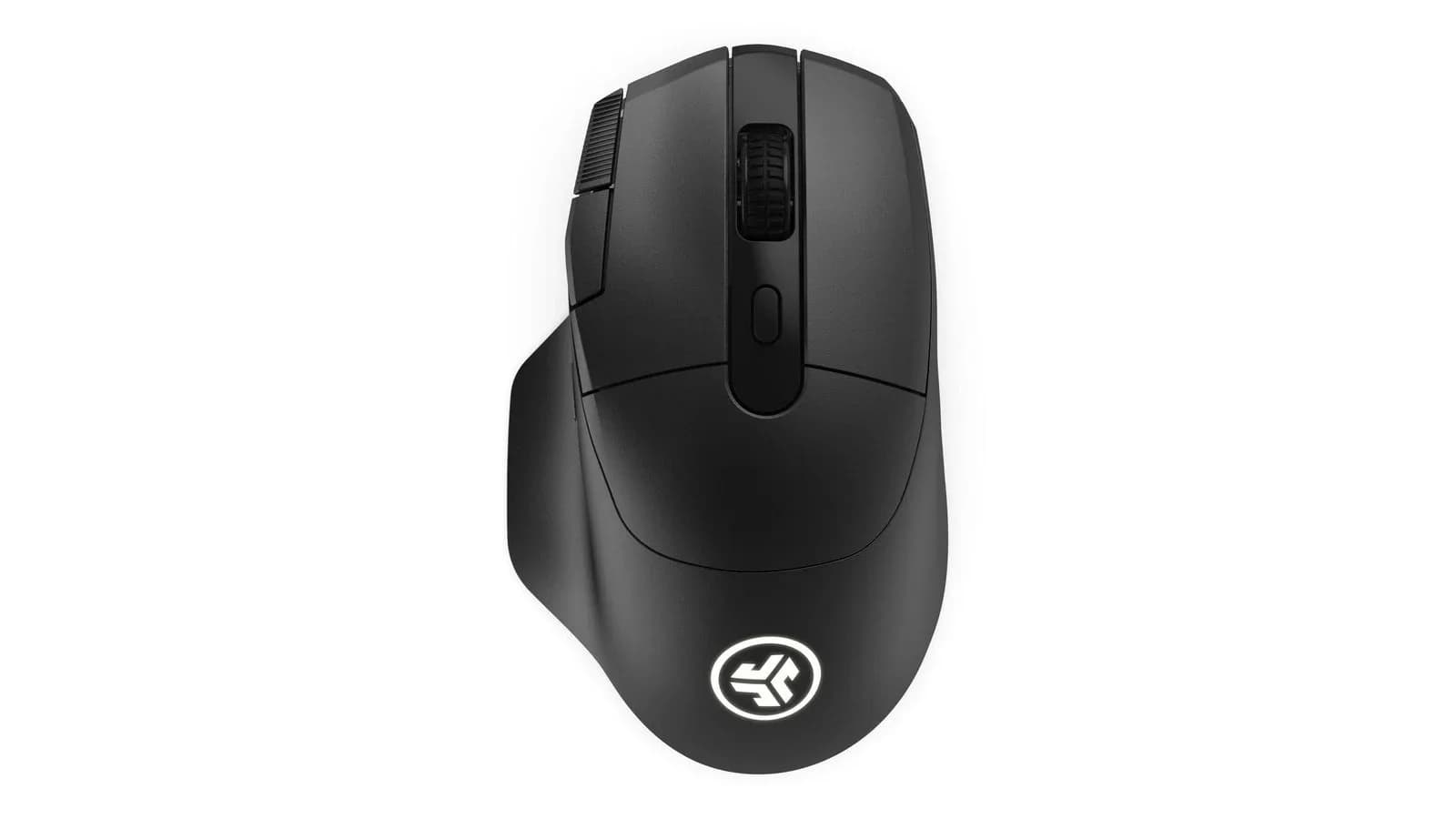
The same app gave us bigger trouble with the mouse from this series, as we describe in the separate review: Lab detected it as a different model and no setting could be changed. The keyboard fares better, but a brand entering the enthusiast gaming tier shouldn't ship flagship devices with software still in beta.
Price against the competition
The launch price of the Daybreak TKL is $149.99, but the manufacturer's store shows $209.09 today, and that gap changes the verdict more than any build detail. Next to keyboards we reviewed earlier it looks like this: the Wooting 80HE costs $199.99 and the Keychron Q1 HE 8K is around $200. At the launch price JLab would be fifty dollars cheaper, and a mature app plus years of competitor experience would justify the difference. At $209 it costs more than both, and a beta app, uneven RGB and plastic go on the bill with no discount.
On the other hand, the magnetic keyboard market has grown a long way downward. Boards with Rapid Trigger and 8000 Hz now start at a few dozen dollars, and around $100 you already find aluminum cases. The Daybreak sits in an awkward middle: pricier than aggressively priced budget boards and cheaper than keyboards bought to last for years. The most expensive models, such as the Asus ROG Azoth 96 HE at 399 euros that we reviewed, play in another league, but even next to that, $150 for plastic with uneven lighting doesn't look like a bargain, and $209 is a price that is hard to defend.
Why it matters: JLab chose the top shelf
JLab is known for earbuds and cheap audio accessories, and it showed its gaming peripherals at CES 2026 as three separate series. Daybreak is the top one: at launch prices, keyboard $150, headset $130, mouse $100. Below it sits the Midnight series, where a mechanical TKL keyboard costs $100, the mouse $70 and the headset $100. So the company set the bar itself: the Daybreak is meant to compete with the keyboards players pay the most for.
That choice sets expectations. If this exact keyboard cost $100 and were sold as a strong mid-range model, uneven RGB and plastic would become minor caveats on a very good product. At $150, let alone $209, with a top-shelf pitch, the same traits read as what they are: missing polish in a segment where polish costs the most.
Who this keyboard is for
Someone who types a lot and plays in their spare time, wants magnetic switches with Rapid Trigger and a pleasant sound, and puts aluminum and flawless RGB second. The macro keys and the dial help at work as much as in games. We wouldn't recommend it to anyone buying a keyboard for years who wants certainty about the durability of switches of undisclosed origin, or to anyone planning elaborate macros.
The Daybreak TKL is a keyboard you will enjoy typing on and cannot buy with a clear conscience at the manufacturer store's price. Without the price it would have scored clearly higher. Feel and sound sit at a level that is rare in this budget, and the feature list (Rapid Trigger, Snap Tap, 8000 Hz, macro keys, dial, USB-C passthrough) has no gaps. If JLab polished the backlight and the software, this would be a very strong candidate for a recommendation.
Uneven RGB on a $150 keyboard, let alone a $209 one, is a quality-control miss. In our view it shows that JLab is not yet playing in the league it placed itself in. The plastic chassis, well made as it is, and a beta app complete the picture: a mid-range device sold as top shelf.
Still, credit where due: for typing alone the Daybreak holds its own against keyboards that cost fifty dollars more. Anyone who values feel above everything else and can live with the backlight and the plastic gets a good keyboard.
Recommendation: buy it only at a price close to the $150 launch level or lower. At the manufacturer store's $209 it makes more sense to go for a Wooting or a Keychron, and if budget matters more, a cheaper aluminum magnetic board. JLab is worth another look with the next generation, if pricing drops or the hardware really grows into the top shelf.

Comments
Discussion
Join the conversation around this story.
Join the discussion
Sign in to comment and reply to other readers.
Sign inNo comments yet
Start the discussion first.