%22%20fill%3D%22rgb(0%2C0%2C0)%22%20d%3D%22M%201708.71%2032.0719%20L%201711.17%2032.1726%20L%201711.48%2033.8726%20C%201698.63%2068.7557%201678.15%20111.062%201663.25%20146.038%20L%201610.27%20270.222%20C%201600.68%20293.044%201548.56%20422.248%201540.04%20431.57%20C%201533.67%20438.547%201128.18%20599.98%201082.51%20618.503%20L%20896.13%20695.087%20C%20861.529%20708.971%20827.042%20723.139%20792.674%20737.591%20C%20773.372%20745.745%20749.086%20754.449%20732.134%20766.537%20C%20692.666%20794.684%20697.752%20841.911%20698.601%20884.356%20C%20699.702%20939.367%20740.841%20953.958%20782.454%20976.677%20L%20861.67%201020.18%20L%201099.89%201152.37%20C%201107.22%201156.5%201119.88%201164.35%201127.14%201167.58%20C%201169.86%201186.61%201146.74%201195.41%201117.9%201208.29%20C%201100.37%201216.11%201079.03%201225.42%201060.64%201233.58%20C%201010.18%201256.26%20959.538%201278.54%20908.726%201300.43%20C%20894.529%201306.71%20881.754%201312.22%20867.258%201317.69%20C%20862.804%201316.04%20858.4%201314.27%20854.051%201312.36%20C%20836.181%201304.32%20811.094%201289.47%20793.048%201279.86%20L%20667.457%201213.33%20L%20559.157%201156.4%20C%20524.558%201137.94%20487.124%201123.47%20472.687%201083.79%20C%20469.558%201074.97%20467.621%201065.77%20466.927%201056.43%20C%20465.765%201038.59%20466.66%201011.98%20466.668%20993.332%20L%20466.359%20873.615%20C%20465.984%20815.652%20463.947%20757.728%20465.485%20699.747%20C%20465.795%20688.052%20466.054%20675.662%20467.175%20664.054%20C%20469.31%20640.858%20475.406%20618.2%20485.2%20597.064%20C%20517.254%20527.676%20568.707%20508.151%20633.929%20480.324%20L%20726.507%20441.167%20L%201040.13%20310.018%20L%201452.31%20137.782%20L%201616.93%2069.4204%20C%201646.93%2057.0612%201678.5%2043.152%201708.71%2032.0719%20z%22%2F%3E%0D%0A%3Cpath%20transform%3D%22translate(0%2C0)%22%20fill%3D%22rgb(0%2C0%2C0)%22%20d%3D%22M%201180.36%20731.182%20C%201195.24%20733.945%201233.7%20756.876%201248.98%20765.026%20L%201364.16%20826.126%20L%201484.37%20889.381%20C%201498.57%20896.955%201532.42%20914.303%201544.52%20923.261%20C%201557.39%20932.823%201567.44%20945.681%201573.6%20960.477%20C%201577.74%20970.613%201580.28%20981.333%201581.12%20992.25%20C%201582.2%201006.88%201581.3%201032.21%201581.31%201047.95%20L%201581.63%201160.97%20C%201582.26%201211.62%201582.57%201262.29%201582.57%201312.95%20C%201582.44%201333.48%201582.84%201362.18%201581%201382.38%20C%201579.14%201403.66%201573.97%201424.53%201565.69%201444.23%20C%201551.08%201479.78%201525.53%201509.75%201492.74%201529.79%20C%201460.17%201549.9%201412.55%201568.06%201376.2%201583.68%20C%201297.89%201617.01%201219.4%201649.9%201140.72%201682.34%20L%20334.313%202018.15%20C%20339.936%202006.05%20344.516%201995.06%20349.5%201982.67%20C%20380.898%201908.42%20413.985%201834.57%20445.11%201760.02%20C%20459.052%201725.94%20473.375%201692.02%20488.076%201658.26%20C%20492.996%201647.05%20502.305%201624.37%20508.527%201614.93%20C%20525.371%201606.59%20557.563%201594.41%20575.732%201586.98%20L%20705.864%201534%20C%20845.58%201478.27%20984.961%201421.71%201124%201364.32%20L%201246.78%201313.94%20C%201290.4%201295.55%201343.27%201280.12%201348.5%201224.17%20C%201350.49%201202.85%201351.54%201164.6%201346.69%201143.96%20C%201344.6%201134.87%201340.77%201126.27%201335.41%201118.63%20C%201321.45%201099.1%201289.07%201084.29%201267.79%201072.67%20L%201188.51%201029.14%20L%20997.495%20923.267%20L%20933.233%20887.54%20C%20924.86%20882.894%20890.238%20867.795%20898.045%20858.391%20C%20907.874%20846.549%20953.243%20829.416%20967.235%20823.263%20L%201064.01%20780.291%20C%201087.5%20769.837%201111.05%20759.524%201134.65%20749.351%20C%201147.99%20743.555%201166.91%20734.741%201180.36%20731.182%20z%22%2F%3E%0D%0A%3C%2Fsvg%3E)
%22%20fill%3D%22rgb(255%2C255%2C255)%22%20d%3D%22M%201708.71%2032.0719%20L%201711.17%2032.1726%20L%201711.48%2033.8726%20C%201698.63%2068.7557%201678.15%20111.062%201663.25%20146.038%20L%201610.27%20270.222%20C%201600.68%20293.044%201548.56%20422.248%201540.04%20431.57%20C%201533.67%20438.547%201128.18%20599.98%201082.51%20618.503%20L%20896.13%20695.087%20C%20861.529%20708.971%20827.042%20723.139%20792.674%20737.591%20C%20773.372%20745.745%20749.086%20754.449%20732.134%20766.537%20C%20692.666%20794.684%20697.752%20841.911%20698.601%20884.356%20C%20699.702%20939.367%20740.841%20953.958%20782.454%20976.677%20L%20861.67%201020.18%20L%201099.89%201152.37%20C%201107.22%201156.5%201119.88%201164.35%201127.14%201167.58%20C%201169.86%201186.61%201146.74%201195.41%201117.9%201208.29%20C%201100.37%201216.11%201079.03%201225.42%201060.64%201233.58%20C%201010.18%201256.26%20959.538%201278.54%20908.726%201300.43%20C%20894.529%201306.71%20881.754%201312.22%20867.258%201317.69%20C%20862.804%201316.04%20858.4%201314.27%20854.051%201312.36%20C%20836.181%201304.32%20811.094%201289.47%20793.048%201279.86%20L%20667.457%201213.33%20L%20559.157%201156.4%20C%20524.558%201137.94%20487.124%201123.47%20472.687%201083.79%20C%20469.558%201074.97%20467.621%201065.77%20466.927%201056.43%20C%20465.765%201038.59%20466.66%201011.98%20466.668%20993.332%20L%20466.359%20873.615%20C%20465.984%20815.652%20463.947%20757.728%20465.485%20699.747%20C%20465.795%20688.052%20466.054%20675.662%20467.175%20664.054%20C%20469.31%20640.858%20475.406%20618.2%20485.2%20597.064%20C%20517.254%20527.676%20568.707%20508.151%20633.929%20480.324%20L%20726.507%20441.167%20L%201040.13%20310.018%20L%201452.31%20137.782%20L%201616.93%2069.4204%20C%201646.93%2057.0612%201678.5%2043.152%201708.71%2032.0719%20z%22%2F%3E%0D%0A%3Cpath%20transform%3D%22translate(0%2C0)%22%20fill%3D%22rgb(255%2C255%2C255)%22%20d%3D%22M%201180.36%20731.182%20C%201195.24%20733.945%201233.7%20756.876%201248.98%20765.026%20L%201364.16%20826.126%20L%201484.37%20889.381%20C%201498.57%20896.955%201532.42%20914.303%201544.52%20923.261%20C%201557.39%20932.823%201567.44%20945.681%201573.6%20960.477%20C%201577.74%20970.613%201580.28%20981.333%201581.12%20992.25%20C%201582.2%201006.88%201581.3%201032.21%201581.31%201047.95%20L%201581.63%201160.97%20C%201582.26%201211.62%201582.57%201262.29%201582.57%201312.95%20C%201582.44%201333.48%201582.84%201362.18%201581%201382.38%20C%201579.14%201403.66%201573.97%201424.53%201565.69%201444.23%20C%201551.08%201479.78%201525.53%201509.75%201492.74%201529.79%20C%201460.17%201549.9%201412.55%201568.06%201376.2%201583.68%20C%201297.89%201617.01%201219.4%201649.9%201140.72%201682.34%20L%20334.313%202018.15%20C%20339.936%202006.05%20344.516%201995.06%20349.5%201982.67%20C%20380.898%201908.42%20413.985%201834.57%20445.11%201760.02%20C%20459.052%201725.94%20473.375%201692.02%20488.076%201658.26%20C%20492.996%201647.05%20502.305%201624.37%20508.527%201614.93%20C%20525.371%201606.59%20557.563%201594.41%20575.732%201586.98%20L%20705.864%201534%20C%20845.58%201478.27%20984.961%201421.71%201124%201364.32%20L%201246.78%201313.94%20C%201290.4%201295.55%201343.27%201280.12%201348.5%201224.17%20C%201350.49%201202.85%201351.54%201164.6%201346.69%201143.96%20C%201344.6%201134.87%201340.77%201126.27%201335.41%201118.63%20C%201321.45%201099.1%201289.07%201084.29%201267.79%201072.67%20L%201188.51%201029.14%20L%20997.495%20923.267%20L%20933.233%20887.54%20C%20924.86%20882.894%20890.238%20867.795%20898.045%20858.391%20C%20907.874%20846.549%20953.243%20829.416%20967.235%20823.263%20L%201064.01%20780.291%20C%201087.5%20769.837%201111.05%20759.524%201134.65%20749.351%20C%201147.99%20743.555%201166.91%20734.741%201180.36%20731.182%20z%22%2F%3E%0D%0A%3C%2Fsvg%3E)

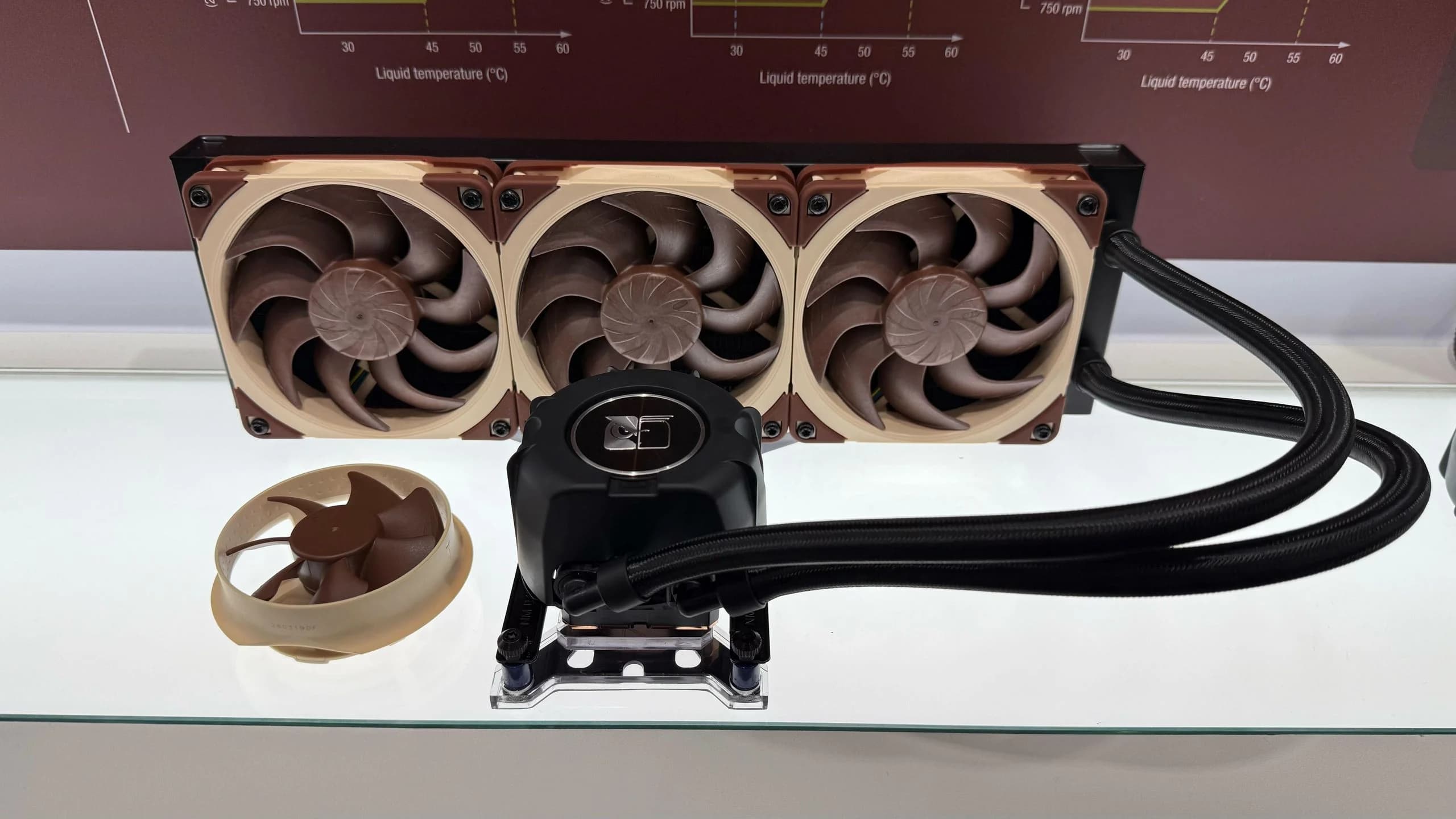
For years Noctua sold a very simple idea: if you care about acoustics, build quality, and long-term consistency, air cooling still makes sense. The NL-LC1 launch does not erase that philosophy. It shows something else instead: modern flagship CPUs have pushed the market to a point where even Noctua no longer wants to pretend that air can cover every serious workload without tradeoffs. That is why this launch matters more than yet another AIO with an LCD slapped on top.
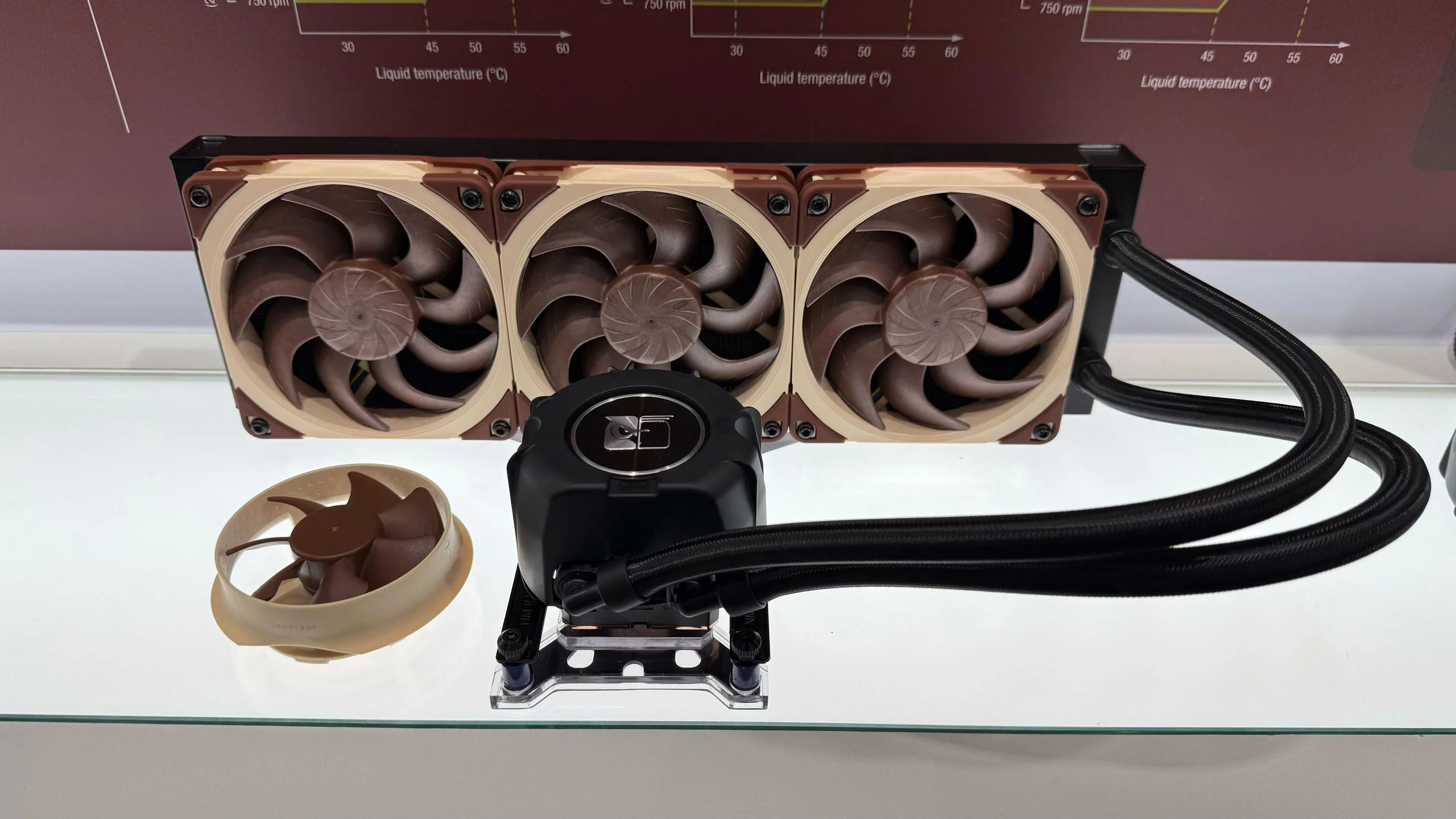
Noctua did not enter AIOs to build another glowing clone
You can see that immediately. There is no attempt to blend into the current AIO market by copying its worst habits. No display, no flashy block, no decorative mess trying to distract from average engineering. Instead, Noctua took a proven Asetek base, added its own NF-A12x25 G2 or NF-A14x25 G2 fans depending on the model, and focused on the one part of AIOs that too many brands treated as background noise for years: the pump itself.
That is a smart place to attack. Cheap and mid-range liquid coolers stopped losing on raw thermal performance a long time ago. Their weak point was often how they felt to live with, especially in quieter cases and at lower fan speeds. Once fan noise drops, pump pitch, vibration, and resonance stop hiding. That is where many otherwise decent AIOs begin to feel cheap.
The NL-LC1 targets exactly that gap. If this series is going to justify its existence at this price level, it will not be because it is liquid. It will be because it treats acoustics like an engineering problem instead of a marketing inconvenience.
The real selling point here is not the radiator. It is the pump treatment
From the launch material and early Computex coverage, the base is Asetek’s Emma V2 platform. That is not bad news. Asetek still underpins a huge part of the market, but a good base alone only gets you to “competent.” The difference comes from what Noctua wrapped around it.
The most interesting detail is the brand’s own acoustic insulation and damping work around the pump assembly. In practice, that is what could separate the NL-LC1 from the crowd of AIOs that look fine on a temperature chart and then become annoying after a week in a real room. And honestly, this is the easiest part of the product to believe in. Noctua has spent too many years obsessing over unpleasant sound profiles to suddenly ignore them here.
If I look at this as hardware I would actually want in my own system, that focus matters more than a dramatic delta on a benchmark slide. Plenty of coolers can manage heat. Far fewer can do it while sounding composed under a powerful desktop CPU.
Why Noctua had to make this move at all
The answer is not complicated. Today’s top CPUs are less forgiving than they used to be. Anyone living with a Ryzen 9 or a Core i9 under real sustained load already knows the conversation is no longer just about “safe temperatures.” It is about how long clocks stay up, how much noise the cooler needs to hold the line, and how much thermal headroom remains once you leave the easy part of the load curve.
The NH-D15 G2 is still an excellent air cooler, but physics is not a brand narrative. A large 360 or 420 mm radiator gives you more thermal buffer, spreads the load more effectively, and makes life easier when a flagship CPU stops behaving like a polite desktop part. Noctua could defend air for a little longer, but the flagship end of the market was already pushing it toward liquid.
And frankly, it is better that the company did this now and did it properly rather than waiting another year and releasing something rushed just to silence the obvious question.
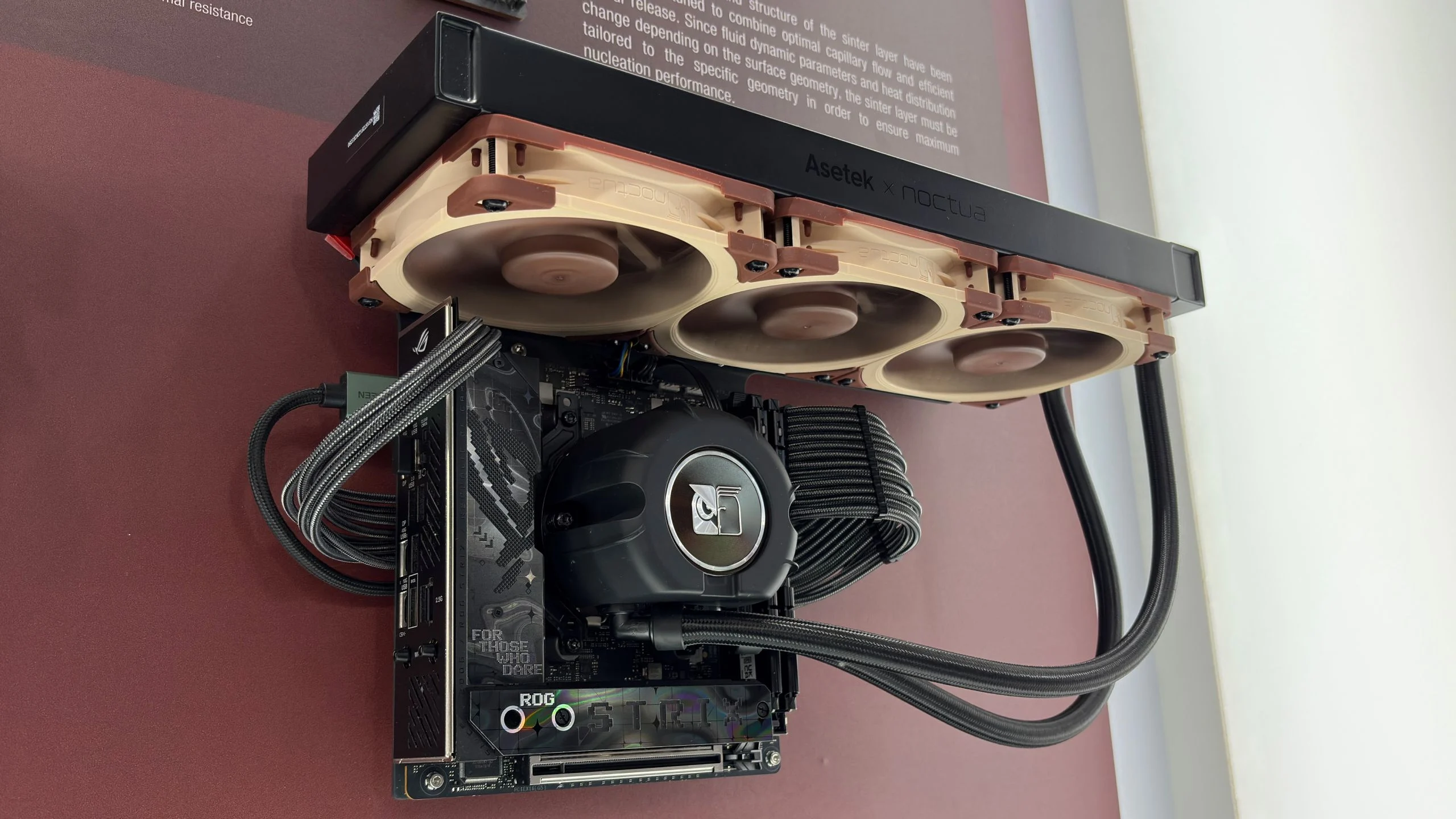
The fan package and mounting story look deliberate, not incidental
That matters because a surprising number of expensive AIOs still treat fans like box filler. Noctua clearly does not. The NF-A12x25 G2 and related models already carry a strong reputation for static pressure behavior and clean acoustics on dense fin stacks. If you care about predictable low-noise profiles, this is exactly the kind of complete package you want to see.
The same applies to mounting and general build discipline. One of Noctua’s long-standing advantages is that its products rarely feel improvised. Screw quality, pressure distribution, backplate hardware, cable routing, and the small physical details inside the box all shape trust before the first stress test begins. An AIO north of 200 euros should offer that by default. In practice, not all of them do.
The hardest question is still the obvious one: how much is silence really worth
This is where Noctua runs into an old problem again. Its products are often good and sometimes extremely good, but the pricing regularly crosses the line where you stop paying for quality alone and start paying for the brand’s prestige and its own internal standards. The NL-LC1 series arrives with aggressive pricing from day one. And this is not just “premium segment” aggressive. It is the kind of pricing that forces direct comparison against the very best alternatives.
At around 220 euros for 240 mm, 250 euros for 360 mm, and 280 euros for 420 mm, Noctua is asking buyers to think beyond “another solid AIO.” At that level you start asking what else the same money can buy. That is where the brand’s biggest problem returns: does the average enthusiast really need something this expensive when Arctic, Liquid Freezer-class competition, and several other strong options already deliver excellent real-world performance for much less?
That is the point where this product stops being easy to recommend. If your priority is first-rate acoustics and you already know that is the part of the experience you will notice every day, the NL-LC1 has a real argument. If we are talking about the broader desktop market, that argument alone is not enough to carry this price without resistance.
This is a strong debut. It is not an automatic buy
The cleanest way to put it is this: the NL-LC1 feels like Noctua’s first liquid cooler, which is a compliment. There is clear discipline here, and a lot of attention paid to the details that only matter once you actually live with the hardware. If the pump acoustics are as good as the early material suggests, the company entered AIOs for a real reason rather than for box-ticking.
That still leaves one problem in place. This is a niche product at a mainstream-unfriendly price. A lot of users will build a perfectly sensible platform around a cheaper AIO or even a very good air cooler and never feel they gave up anything important. That is why I would not call this a new default. It is a very polished, very expensive cooler for buyers who know exactly what they are paying for.
Comments
Discussion
Join the conversation around this story.
Join the discussion
Sign in to comment and reply to other readers.
Sign inNo comments yet
Start the discussion first.