%22%20fill%3D%22rgb(0%2C0%2C0)%22%20d%3D%22M%201708.71%2032.0719%20L%201711.17%2032.1726%20L%201711.48%2033.8726%20C%201698.63%2068.7557%201678.15%20111.062%201663.25%20146.038%20L%201610.27%20270.222%20C%201600.68%20293.044%201548.56%20422.248%201540.04%20431.57%20C%201533.67%20438.547%201128.18%20599.98%201082.51%20618.503%20L%20896.13%20695.087%20C%20861.529%20708.971%20827.042%20723.139%20792.674%20737.591%20C%20773.372%20745.745%20749.086%20754.449%20732.134%20766.537%20C%20692.666%20794.684%20697.752%20841.911%20698.601%20884.356%20C%20699.702%20939.367%20740.841%20953.958%20782.454%20976.677%20L%20861.67%201020.18%20L%201099.89%201152.37%20C%201107.22%201156.5%201119.88%201164.35%201127.14%201167.58%20C%201169.86%201186.61%201146.74%201195.41%201117.9%201208.29%20C%201100.37%201216.11%201079.03%201225.42%201060.64%201233.58%20C%201010.18%201256.26%20959.538%201278.54%20908.726%201300.43%20C%20894.529%201306.71%20881.754%201312.22%20867.258%201317.69%20C%20862.804%201316.04%20858.4%201314.27%20854.051%201312.36%20C%20836.181%201304.32%20811.094%201289.47%20793.048%201279.86%20L%20667.457%201213.33%20L%20559.157%201156.4%20C%20524.558%201137.94%20487.124%201123.47%20472.687%201083.79%20C%20469.558%201074.97%20467.621%201065.77%20466.927%201056.43%20C%20465.765%201038.59%20466.66%201011.98%20466.668%20993.332%20L%20466.359%20873.615%20C%20465.984%20815.652%20463.947%20757.728%20465.485%20699.747%20C%20465.795%20688.052%20466.054%20675.662%20467.175%20664.054%20C%20469.31%20640.858%20475.406%20618.2%20485.2%20597.064%20C%20517.254%20527.676%20568.707%20508.151%20633.929%20480.324%20L%20726.507%20441.167%20L%201040.13%20310.018%20L%201452.31%20137.782%20L%201616.93%2069.4204%20C%201646.93%2057.0612%201678.5%2043.152%201708.71%2032.0719%20z%22%2F%3E%0D%0A%3Cpath%20transform%3D%22translate(0%2C0)%22%20fill%3D%22rgb(0%2C0%2C0)%22%20d%3D%22M%201180.36%20731.182%20C%201195.24%20733.945%201233.7%20756.876%201248.98%20765.026%20L%201364.16%20826.126%20L%201484.37%20889.381%20C%201498.57%20896.955%201532.42%20914.303%201544.52%20923.261%20C%201557.39%20932.823%201567.44%20945.681%201573.6%20960.477%20C%201577.74%20970.613%201580.28%20981.333%201581.12%20992.25%20C%201582.2%201006.88%201581.3%201032.21%201581.31%201047.95%20L%201581.63%201160.97%20C%201582.26%201211.62%201582.57%201262.29%201582.57%201312.95%20C%201582.44%201333.48%201582.84%201362.18%201581%201382.38%20C%201579.14%201403.66%201573.97%201424.53%201565.69%201444.23%20C%201551.08%201479.78%201525.53%201509.75%201492.74%201529.79%20C%201460.17%201549.9%201412.55%201568.06%201376.2%201583.68%20C%201297.89%201617.01%201219.4%201649.9%201140.72%201682.34%20L%20334.313%202018.15%20C%20339.936%202006.05%20344.516%201995.06%20349.5%201982.67%20C%20380.898%201908.42%20413.985%201834.57%20445.11%201760.02%20C%20459.052%201725.94%20473.375%201692.02%20488.076%201658.26%20C%20492.996%201647.05%20502.305%201624.37%20508.527%201614.93%20C%20525.371%201606.59%20557.563%201594.41%20575.732%201586.98%20L%20705.864%201534%20C%20845.58%201478.27%20984.961%201421.71%201124%201364.32%20L%201246.78%201313.94%20C%201290.4%201295.55%201343.27%201280.12%201348.5%201224.17%20C%201350.49%201202.85%201351.54%201164.6%201346.69%201143.96%20C%201344.6%201134.87%201340.77%201126.27%201335.41%201118.63%20C%201321.45%201099.1%201289.07%201084.29%201267.79%201072.67%20L%201188.51%201029.14%20L%20997.495%20923.267%20L%20933.233%20887.54%20C%20924.86%20882.894%20890.238%20867.795%20898.045%20858.391%20C%20907.874%20846.549%20953.243%20829.416%20967.235%20823.263%20L%201064.01%20780.291%20C%201087.5%20769.837%201111.05%20759.524%201134.65%20749.351%20C%201147.99%20743.555%201166.91%20734.741%201180.36%20731.182%20z%22%2F%3E%0D%0A%3C%2Fsvg%3E)
%22%20fill%3D%22rgb(255%2C255%2C255)%22%20d%3D%22M%201708.71%2032.0719%20L%201711.17%2032.1726%20L%201711.48%2033.8726%20C%201698.63%2068.7557%201678.15%20111.062%201663.25%20146.038%20L%201610.27%20270.222%20C%201600.68%20293.044%201548.56%20422.248%201540.04%20431.57%20C%201533.67%20438.547%201128.18%20599.98%201082.51%20618.503%20L%20896.13%20695.087%20C%20861.529%20708.971%20827.042%20723.139%20792.674%20737.591%20C%20773.372%20745.745%20749.086%20754.449%20732.134%20766.537%20C%20692.666%20794.684%20697.752%20841.911%20698.601%20884.356%20C%20699.702%20939.367%20740.841%20953.958%20782.454%20976.677%20L%20861.67%201020.18%20L%201099.89%201152.37%20C%201107.22%201156.5%201119.88%201164.35%201127.14%201167.58%20C%201169.86%201186.61%201146.74%201195.41%201117.9%201208.29%20C%201100.37%201216.11%201079.03%201225.42%201060.64%201233.58%20C%201010.18%201256.26%20959.538%201278.54%20908.726%201300.43%20C%20894.529%201306.71%20881.754%201312.22%20867.258%201317.69%20C%20862.804%201316.04%20858.4%201314.27%20854.051%201312.36%20C%20836.181%201304.32%20811.094%201289.47%20793.048%201279.86%20L%20667.457%201213.33%20L%20559.157%201156.4%20C%20524.558%201137.94%20487.124%201123.47%20472.687%201083.79%20C%20469.558%201074.97%20467.621%201065.77%20466.927%201056.43%20C%20465.765%201038.59%20466.66%201011.98%20466.668%20993.332%20L%20466.359%20873.615%20C%20465.984%20815.652%20463.947%20757.728%20465.485%20699.747%20C%20465.795%20688.052%20466.054%20675.662%20467.175%20664.054%20C%20469.31%20640.858%20475.406%20618.2%20485.2%20597.064%20C%20517.254%20527.676%20568.707%20508.151%20633.929%20480.324%20L%20726.507%20441.167%20L%201040.13%20310.018%20L%201452.31%20137.782%20L%201616.93%2069.4204%20C%201646.93%2057.0612%201678.5%2043.152%201708.71%2032.0719%20z%22%2F%3E%0D%0A%3Cpath%20transform%3D%22translate(0%2C0)%22%20fill%3D%22rgb(255%2C255%2C255)%22%20d%3D%22M%201180.36%20731.182%20C%201195.24%20733.945%201233.7%20756.876%201248.98%20765.026%20L%201364.16%20826.126%20L%201484.37%20889.381%20C%201498.57%20896.955%201532.42%20914.303%201544.52%20923.261%20C%201557.39%20932.823%201567.44%20945.681%201573.6%20960.477%20C%201577.74%20970.613%201580.28%20981.333%201581.12%20992.25%20C%201582.2%201006.88%201581.3%201032.21%201581.31%201047.95%20L%201581.63%201160.97%20C%201582.26%201211.62%201582.57%201262.29%201582.57%201312.95%20C%201582.44%201333.48%201582.84%201362.18%201581%201382.38%20C%201579.14%201403.66%201573.97%201424.53%201565.69%201444.23%20C%201551.08%201479.78%201525.53%201509.75%201492.74%201529.79%20C%201460.17%201549.9%201412.55%201568.06%201376.2%201583.68%20C%201297.89%201617.01%201219.4%201649.9%201140.72%201682.34%20L%20334.313%202018.15%20C%20339.936%202006.05%20344.516%201995.06%20349.5%201982.67%20C%20380.898%201908.42%20413.985%201834.57%20445.11%201760.02%20C%20459.052%201725.94%20473.375%201692.02%20488.076%201658.26%20C%20492.996%201647.05%20502.305%201624.37%20508.527%201614.93%20C%20525.371%201606.59%20557.563%201594.41%20575.732%201586.98%20L%20705.864%201534%20C%20845.58%201478.27%20984.961%201421.71%201124%201364.32%20L%201246.78%201313.94%20C%201290.4%201295.55%201343.27%201280.12%201348.5%201224.17%20C%201350.49%201202.85%201351.54%201164.6%201346.69%201143.96%20C%201344.6%201134.87%201340.77%201126.27%201335.41%201118.63%20C%201321.45%201099.1%201289.07%201084.29%201267.79%201072.67%20L%201188.51%201029.14%20L%20997.495%20923.267%20L%20933.233%20887.54%20C%20924.86%20882.894%20890.238%20867.795%20898.045%20858.391%20C%20907.874%20846.549%20953.243%20829.416%20967.235%20823.263%20L%201064.01%20780.291%20C%201087.5%20769.837%201111.05%20759.524%201134.65%20749.351%20C%201147.99%20743.555%201166.91%20734.741%201180.36%20731.182%20z%22%2F%3E%0D%0A%3C%2Fsvg%3E)

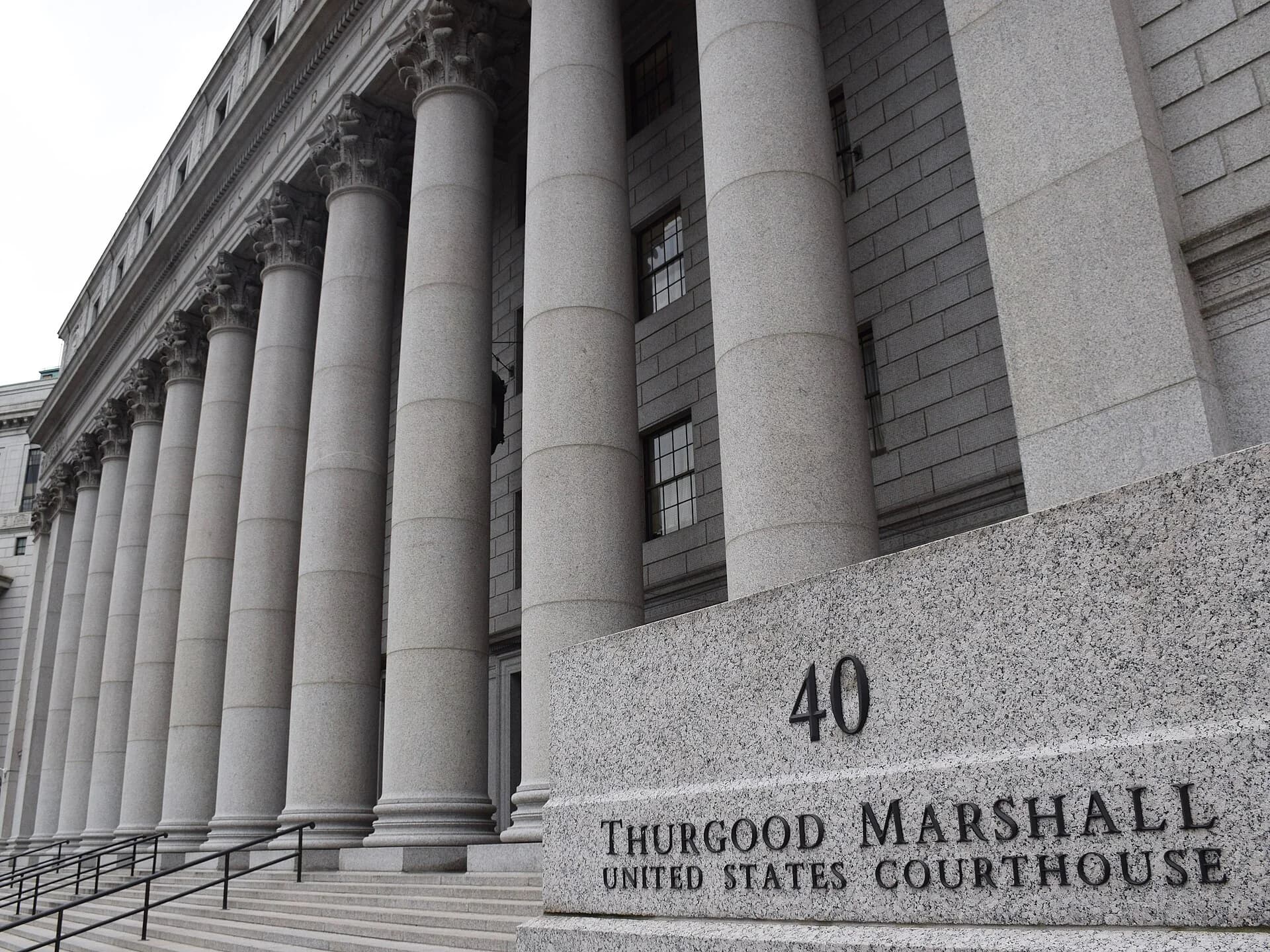
On September 1, the US Department of Justice filed the government's official position in New York Times v. OpenAI and Microsoft before a federal court in Manhattan. It's the first time the US government has taken any position at all on training AI models on other people's content. The DOJ wrote plainly that training large language models on copyrighted text is fair use, and that limiting AI development through a mistaken reading of that law threatens American national security. The New York Times answered just as sharply, accusing the administration of siding with trillion-dollar companies at the expense of creators.
A case that's been running since 2023
The New York Times sued OpenAI and Microsoft on December 27, 2023, seeking to stop the companies from training models on its articles without consent or payment. The complaint covers direct and contributory copyright infringement, DMCA violations, unfair competition and trademark dilution. One specific claim centers on Wirecutter, the Times' product-review outlet: the paper argues that ChatGPT's answers strip out affiliate links to the products it reviews, routing the referral revenue to OpenAI and Microsoft instead of the Times.
The case moved through court for two years without a major ruling, until March 2025, when Judge Sidney Stein rejected most of OpenAI's motions to dismiss and let the bulk of the Times' claims proceed. In January 2026, the same judge upheld a discovery order from Magistrate Judge Wang requiring OpenAI to hand over 20 million de-identified ChatGPT conversation logs, one of the largest discovery rulings in the history of AI litigation. The Times has been combing through those logs since May 2026, looking for evidence of how the model actually drew on its articles. No trial date has been set, but summary judgment briefing closed in April 2026, and the trial itself could start in 2027 if the case survives that stage. This is the still-open, unresolved case the Justice Department just stepped into, laying out the US government's formal position for the first time.
The government already weighed in once, just quietly
September's DOJ filing didn't come out of nowhere. On May 9, 2025, the US Copyright Office published the third and final report in its series on AI and copyright, a cautious, 108-page legal analysis. The office's conclusion fell well short of a simple "yes, that's fair use": the report warned that fair use can't be assumed up front, has to be evaluated separately for each way training data gets used, and that some uses simply can't be defended as fair use at all.
A day after the preliminary version of that report came out, the administration fired Carla Hayden, the Librarian of Congress. A day after that, it fired Shira Perlmutter, the Register of Copyrights who oversaw the report. In September's filing, the DOJ openly dismissed its own office's analysis as inadequate. In other words: the same government that removed the people responsible for the more cautious version of this analysis a year earlier is now formally overruling that analysis in court.
Scale: this is one case among dozens
The Times' dispute with OpenAI is just one front in a much wider legal war. Anthropic paid $1.5 billion in September 2025 to close a suit brought by a group of literary authors, with the court splitting the case in two: training models on the books themselves counted as fair use, but storing pirated copies of those books didn't, which still worked out to roughly $3,000 per work. The company now prepping a record-setting IPO targeting $2 trillion preferred to pay rather than risk a courtroom precedent.
Meta is fighting on two fronts at once: an older suit from authors including Sarah Silverman and Richard Kadrey, partly dismissed in 2024 but with its core copyright claims still standing, and a new 2026 suit from five publishers (Hachette, Macmillan, McGraw Hill, Elsevier, Cengage) and author Scott Turow. In the UK, Getty Images dropped its primary claims against Stability AI mid-trial in November 2025, walking away with only a narrow trademark win, though a separate US case is just getting started. Each of these cases shapes how courts read fair use in AI training on its own, and the DOJ's position in the Times case matters precisely because it addresses the underlying principle that will carry over into all of them.
A government that's suing and investing at the same time
The DOJ filing lands differently next to a separate, ongoing conversation: OpenAI is negotiating with the Trump administration to hand the US government a direct equity stake of roughly five percent, with Sam Altman personally pitching it as part of a broader strategy. Nat Purser of Public Knowledge put the problem plainly: a government that's simultaneously a shareholder and a regulator has less incentive to enforce safety rules that could lower the value of its own investment. The Justice Department defending OpenAI's interest in a copyright dispute the same month the administration is negotiating an equity stake in the company doesn't have to mean bad faith. It only has to look exactly like what it looks like to undercut the DOJ's credibility as a neutral legal analysis. This isn't the first time this year OpenAI's relationships have raised trust questions: the company itself cut Cursor off from its models in September, citing a lack of trust in the editor's new owner, so it knows exactly how much that word weighs when it's aimed at someone else.
What the DOJ actually argued
The government's argument rests on transformation. An AI model, per the DOJ, doesn't use an article the way its author intended a reader to, meaning for information or entertainment. Instead, it converts the text into numerical representations and learns statistical relationships about vocabulary, syntax and knowledge from them, which lets the model predict text and perform tasks from editing to translation. That, in the DOJ's view, makes the process "exceedingly transformative" under copyright law, and the societal benefits of AI development outweigh the potential competitive harm to publishers.
The department also flagged that the filing is only a "statement of interest," a formal way to lay out the government's view without becoming a party to the case. A filing like that carries no binding force, and the judge is free to ignore it entirely. Still, this is the first time the US government has weighed in on this kind of case at all, so the document's weight reaches beyond its formal status: judges in other, still-pending cases will now know how this administration reads the law.
US copyright law weighs fair use on four factors: the purpose and character of the use, the nature of the original work, how much of it got used, and the effect on the market for the original. The DOJ's filing hits mainly the first and fourth factors: training a model, in this reading, serves a different purpose than reading an article, so it doesn't compete directly in the same market. The Times pushes back on exactly that point, pointing to the stripped Wirecutter affiliate links as concrete, countable proof that market competition does exist.
The Times' answer
New York Times spokesman Graham James called it plainly an alliance between the administration and "trillion-dollar A.I. companies" at the expense of American creators. Letting companies take content without consent or compensation, per the Times, undermines the sustainability of human-made content that AI itself needs to function. That line gets at the real tension in this case: language models need a steady supply of new, quality text to stay current, and any publisher that loses a fight like this without compensation has fewer reasons to keep publishing for free online at all.
The DOJ's transformation argument has real grounding in copyright law and isn't the administration's invention for the sake of one case. Courts have recognized fair use for years in tools that process someone else's content into something structurally different rather than a substitute for the original, and search engines and text indexes are proven precedent for that reading. The problem is that the DOJ, in the same filing, dismissed 108 pages of its own office's cautious analysis in a single sentence, an analysis published a year earlier by people the administration fired the day after it came out. This finishes a decision already made back in May 2025, just personally then and formally in court now, rather than a neutral legal position that came from nowhere. The five-percent government stake in OpenAI being negotiated at the same time only deepens the problem: even if the transformation argument were legally flawless, it's hard to read as impartial when the person who wrote the filing may soon own a piece of the side it's arguing for.
For the AI industry, this position is valuable regardless of whether Judge Stein gives it any weight at all. Companies like OpenAI and Anthropic pay lawyers to cite exactly this kind of document in every case ahead of them, and there are dozens still coming, from Meta to Stability AI. Anthropic's $1.5 billion settlement showed that even a company convinced it was right would rather pay than risk a bad ruling with an appeal attached. The government's position shifts that math by lowering the risk of losing in court, which in turn lowers the price AI companies have to pay publishers for peace.
The biggest loser in this setup is the smaller publisher without the Times' budget for a multi-year court fight. The New York Times can afford to keep this case running for years no matter what the DOJ says. A local newsroom or an independent outlet whose content also ended up in a training set doesn't have that luxury, and the government's position takes away their leverage first, before any court ever hands down a final ruling.
Comments
Discussion
Join the conversation around this story.
Join the discussion
Sign in to comment and reply to other readers.
Sign inNo comments yet
Start the discussion first.