%22%20fill%3D%22rgb(0%2C0%2C0)%22%20d%3D%22M%201708.71%2032.0719%20L%201711.17%2032.1726%20L%201711.48%2033.8726%20C%201698.63%2068.7557%201678.15%20111.062%201663.25%20146.038%20L%201610.27%20270.222%20C%201600.68%20293.044%201548.56%20422.248%201540.04%20431.57%20C%201533.67%20438.547%201128.18%20599.98%201082.51%20618.503%20L%20896.13%20695.087%20C%20861.529%20708.971%20827.042%20723.139%20792.674%20737.591%20C%20773.372%20745.745%20749.086%20754.449%20732.134%20766.537%20C%20692.666%20794.684%20697.752%20841.911%20698.601%20884.356%20C%20699.702%20939.367%20740.841%20953.958%20782.454%20976.677%20L%20861.67%201020.18%20L%201099.89%201152.37%20C%201107.22%201156.5%201119.88%201164.35%201127.14%201167.58%20C%201169.86%201186.61%201146.74%201195.41%201117.9%201208.29%20C%201100.37%201216.11%201079.03%201225.42%201060.64%201233.58%20C%201010.18%201256.26%20959.538%201278.54%20908.726%201300.43%20C%20894.529%201306.71%20881.754%201312.22%20867.258%201317.69%20C%20862.804%201316.04%20858.4%201314.27%20854.051%201312.36%20C%20836.181%201304.32%20811.094%201289.47%20793.048%201279.86%20L%20667.457%201213.33%20L%20559.157%201156.4%20C%20524.558%201137.94%20487.124%201123.47%20472.687%201083.79%20C%20469.558%201074.97%20467.621%201065.77%20466.927%201056.43%20C%20465.765%201038.59%20466.66%201011.98%20466.668%20993.332%20L%20466.359%20873.615%20C%20465.984%20815.652%20463.947%20757.728%20465.485%20699.747%20C%20465.795%20688.052%20466.054%20675.662%20467.175%20664.054%20C%20469.31%20640.858%20475.406%20618.2%20485.2%20597.064%20C%20517.254%20527.676%20568.707%20508.151%20633.929%20480.324%20L%20726.507%20441.167%20L%201040.13%20310.018%20L%201452.31%20137.782%20L%201616.93%2069.4204%20C%201646.93%2057.0612%201678.5%2043.152%201708.71%2032.0719%20z%22%2F%3E%0D%0A%3Cpath%20transform%3D%22translate(0%2C0)%22%20fill%3D%22rgb(0%2C0%2C0)%22%20d%3D%22M%201180.36%20731.182%20C%201195.24%20733.945%201233.7%20756.876%201248.98%20765.026%20L%201364.16%20826.126%20L%201484.37%20889.381%20C%201498.57%20896.955%201532.42%20914.303%201544.52%20923.261%20C%201557.39%20932.823%201567.44%20945.681%201573.6%20960.477%20C%201577.74%20970.613%201580.28%20981.333%201581.12%20992.25%20C%201582.2%201006.88%201581.3%201032.21%201581.31%201047.95%20L%201581.63%201160.97%20C%201582.26%201211.62%201582.57%201262.29%201582.57%201312.95%20C%201582.44%201333.48%201582.84%201362.18%201581%201382.38%20C%201579.14%201403.66%201573.97%201424.53%201565.69%201444.23%20C%201551.08%201479.78%201525.53%201509.75%201492.74%201529.79%20C%201460.17%201549.9%201412.55%201568.06%201376.2%201583.68%20C%201297.89%201617.01%201219.4%201649.9%201140.72%201682.34%20L%20334.313%202018.15%20C%20339.936%202006.05%20344.516%201995.06%20349.5%201982.67%20C%20380.898%201908.42%20413.985%201834.57%20445.11%201760.02%20C%20459.052%201725.94%20473.375%201692.02%20488.076%201658.26%20C%20492.996%201647.05%20502.305%201624.37%20508.527%201614.93%20C%20525.371%201606.59%20557.563%201594.41%20575.732%201586.98%20L%20705.864%201534%20C%20845.58%201478.27%20984.961%201421.71%201124%201364.32%20L%201246.78%201313.94%20C%201290.4%201295.55%201343.27%201280.12%201348.5%201224.17%20C%201350.49%201202.85%201351.54%201164.6%201346.69%201143.96%20C%201344.6%201134.87%201340.77%201126.27%201335.41%201118.63%20C%201321.45%201099.1%201289.07%201084.29%201267.79%201072.67%20L%201188.51%201029.14%20L%20997.495%20923.267%20L%20933.233%20887.54%20C%20924.86%20882.894%20890.238%20867.795%20898.045%20858.391%20C%20907.874%20846.549%20953.243%20829.416%20967.235%20823.263%20L%201064.01%20780.291%20C%201087.5%20769.837%201111.05%20759.524%201134.65%20749.351%20C%201147.99%20743.555%201166.91%20734.741%201180.36%20731.182%20z%22%2F%3E%0D%0A%3C%2Fsvg%3E)
%22%20fill%3D%22rgb(255%2C255%2C255)%22%20d%3D%22M%201708.71%2032.0719%20L%201711.17%2032.1726%20L%201711.48%2033.8726%20C%201698.63%2068.7557%201678.15%20111.062%201663.25%20146.038%20L%201610.27%20270.222%20C%201600.68%20293.044%201548.56%20422.248%201540.04%20431.57%20C%201533.67%20438.547%201128.18%20599.98%201082.51%20618.503%20L%20896.13%20695.087%20C%20861.529%20708.971%20827.042%20723.139%20792.674%20737.591%20C%20773.372%20745.745%20749.086%20754.449%20732.134%20766.537%20C%20692.666%20794.684%20697.752%20841.911%20698.601%20884.356%20C%20699.702%20939.367%20740.841%20953.958%20782.454%20976.677%20L%20861.67%201020.18%20L%201099.89%201152.37%20C%201107.22%201156.5%201119.88%201164.35%201127.14%201167.58%20C%201169.86%201186.61%201146.74%201195.41%201117.9%201208.29%20C%201100.37%201216.11%201079.03%201225.42%201060.64%201233.58%20C%201010.18%201256.26%20959.538%201278.54%20908.726%201300.43%20C%20894.529%201306.71%20881.754%201312.22%20867.258%201317.69%20C%20862.804%201316.04%20858.4%201314.27%20854.051%201312.36%20C%20836.181%201304.32%20811.094%201289.47%20793.048%201279.86%20L%20667.457%201213.33%20L%20559.157%201156.4%20C%20524.558%201137.94%20487.124%201123.47%20472.687%201083.79%20C%20469.558%201074.97%20467.621%201065.77%20466.927%201056.43%20C%20465.765%201038.59%20466.66%201011.98%20466.668%20993.332%20L%20466.359%20873.615%20C%20465.984%20815.652%20463.947%20757.728%20465.485%20699.747%20C%20465.795%20688.052%20466.054%20675.662%20467.175%20664.054%20C%20469.31%20640.858%20475.406%20618.2%20485.2%20597.064%20C%20517.254%20527.676%20568.707%20508.151%20633.929%20480.324%20L%20726.507%20441.167%20L%201040.13%20310.018%20L%201452.31%20137.782%20L%201616.93%2069.4204%20C%201646.93%2057.0612%201678.5%2043.152%201708.71%2032.0719%20z%22%2F%3E%0D%0A%3Cpath%20transform%3D%22translate(0%2C0)%22%20fill%3D%22rgb(255%2C255%2C255)%22%20d%3D%22M%201180.36%20731.182%20C%201195.24%20733.945%201233.7%20756.876%201248.98%20765.026%20L%201364.16%20826.126%20L%201484.37%20889.381%20C%201498.57%20896.955%201532.42%20914.303%201544.52%20923.261%20C%201557.39%20932.823%201567.44%20945.681%201573.6%20960.477%20C%201577.74%20970.613%201580.28%20981.333%201581.12%20992.25%20C%201582.2%201006.88%201581.3%201032.21%201581.31%201047.95%20L%201581.63%201160.97%20C%201582.26%201211.62%201582.57%201262.29%201582.57%201312.95%20C%201582.44%201333.48%201582.84%201362.18%201581%201382.38%20C%201579.14%201403.66%201573.97%201424.53%201565.69%201444.23%20C%201551.08%201479.78%201525.53%201509.75%201492.74%201529.79%20C%201460.17%201549.9%201412.55%201568.06%201376.2%201583.68%20C%201297.89%201617.01%201219.4%201649.9%201140.72%201682.34%20L%20334.313%202018.15%20C%20339.936%202006.05%20344.516%201995.06%20349.5%201982.67%20C%20380.898%201908.42%20413.985%201834.57%20445.11%201760.02%20C%20459.052%201725.94%20473.375%201692.02%20488.076%201658.26%20C%20492.996%201647.05%20502.305%201624.37%20508.527%201614.93%20C%20525.371%201606.59%20557.563%201594.41%20575.732%201586.98%20L%20705.864%201534%20C%20845.58%201478.27%20984.961%201421.71%201124%201364.32%20L%201246.78%201313.94%20C%201290.4%201295.55%201343.27%201280.12%201348.5%201224.17%20C%201350.49%201202.85%201351.54%201164.6%201346.69%201143.96%20C%201344.6%201134.87%201340.77%201126.27%201335.41%201118.63%20C%201321.45%201099.1%201289.07%201084.29%201267.79%201072.67%20L%201188.51%201029.14%20L%20997.495%20923.267%20L%20933.233%20887.54%20C%20924.86%20882.894%20890.238%20867.795%20898.045%20858.391%20C%20907.874%20846.549%20953.243%20829.416%20967.235%20823.263%20L%201064.01%20780.291%20C%201087.5%20769.837%201111.05%20759.524%201134.65%20749.351%20C%201147.99%20743.555%201166.91%20734.741%201180.36%20731.182%20z%22%2F%3E%0D%0A%3C%2Fsvg%3E)

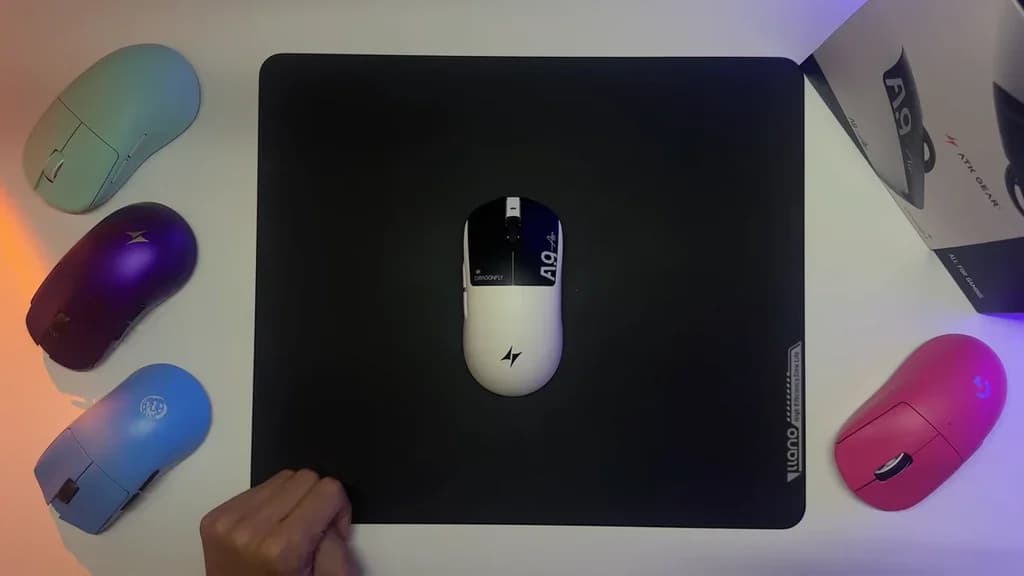
Not long ago, buying an ATK, MCHOSE, or VXE mouse still required some faith in a name that was not sitting in a large electronics store next to Logitech. That equation has changed. Among people who follow FPS peripherals, the question is now less often “are Chinese peripherals any good?” and more often this: why should similar performance still cost two or three times more just because the logo is familiar?
This does not mean that Western brands suddenly make bad hardware. Razer, Logitech, Zowie, and SteelSeries still produce excellent mice and keyboards. The problem is that smaller Asian brands no longer leave them easy ground. They move sensors, lightweight shells, and usable software into products quickly, while carrying less of the marketing cost into the final price. This is not a story about miracle quality for twenty dollars. It is a story about a market that learned to inspect the product before trusting the brand.
There is no single “Chinese peripheral market”
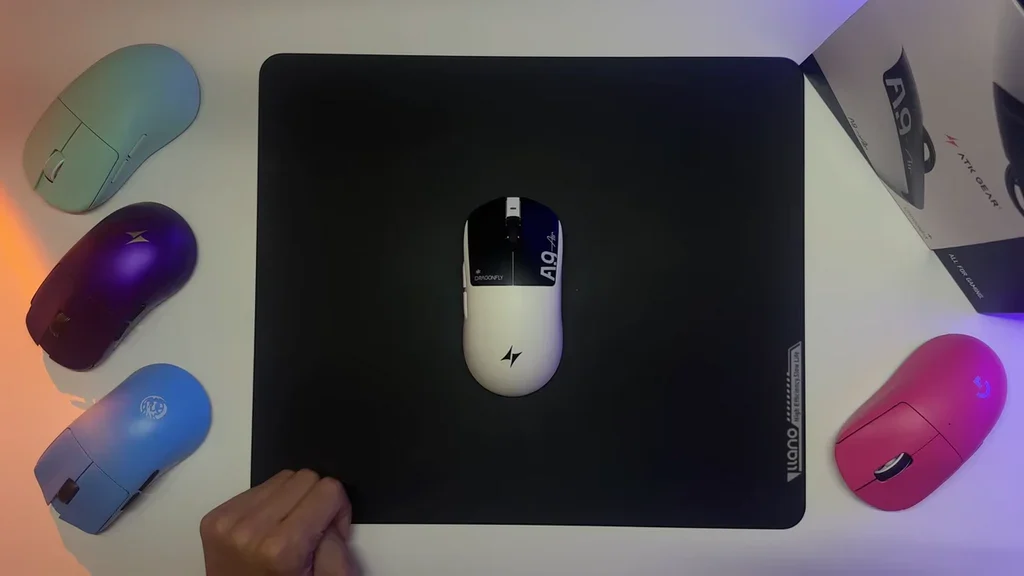
Throwing ATK, VXE, MCHOSE, WLmouse, Lamzu, Dareu, and Attack Shark into one bucket called “Chinese mice” is convenient, but it is not useful. These brands differ in quality control, software, production scale, and customer support. Some build for enthusiasts, some compete almost entirely on price, and some offer a few excellent models surrounded by much weaker ones.
It is also time to drop the lazy story in which Chinese factories merely copy Western projects and accidentally make similar hardware for less. Peripherals have relied on global supply chains for years. Design, shell work, assembly, firmware, sensors, wireless receivers, and distribution do not need to happen in the same country. Smaller Asian brands operate inside a mature production ecosystem and can source components quickly, but that does not remove their responsibility for the finished product.
The obvious difference is speed. A large corporation has to plan a launch, build marketing, reserve retail channels, and arrange support across regions. A smaller brand can release a revision after the first serious wave of community feedback. That can be a strength. It can also be a warning, because an early production batch may feel suspiciously close to a paid beta test.
A flagship sensor no longer justifies a flagship price by itself
A few years ago, a “flagship sensor” was enough to support a price close to $150 or $200. Today PAW3395 appears in far cheaper mice, and PAW3950 is spreading beyond the Western mainstream. That does not make every mouse identical. A sensor does not solve wireless stability, click feel, weight balance, skates, battery behavior, or firmware.
This is where the market became uncomfortable for the largest brands. A player can compare the MCHOSE G3 V2 Pro, an ATK F1, or a VXE Dragonfly R1 against a more expensive familiar mouse and see that the baseline spec sheet no longer looks like a canyon. A major brand can still defend itself with support, software, or a genuinely distinctive shape. It can no longer expect the sensor model alone to end the conversation.
That matters most to players of CS2, Valorant, and Apex Legends. They are more likely to ask about shape, weight, clicks, and receiver stability than RGB. If a lower-cost mouse feels right, tracks reliably, and does not create trouble after a week, the logo loses some of its old power.
Web configuration is useful, not proof that a brand has solved software
One real change is the move away from heavy desktop suites running in the background. MCHOSE offers M HUB as an application and a browser tool. VXE provides its own route for DPI, polling rate, button, and firmware settings. For the user, that can mean fewer background processes and a simpler way to move settings between systems.
WebHID is not magic. Browser configuration works best in Chromium-based browsers, requires device permissions, and still depends on the quality of the mouse firmware. A well-made web driver is more pleasant than a bloated desktop suite. A poorly made one becomes worse, especially when an update for the receiver or the mouse needs several attempts.
The decisive question is whether the brand maintains firmware sensibly and explains the update path clearly. ATK, VXE, and MCHOSE have made visible progress here, but the difference between models is still substantial. “Web driver” is a feature to check before purchase, not a guarantee that a product will be painless.
Weight and materials are where the smaller brands changed the pace
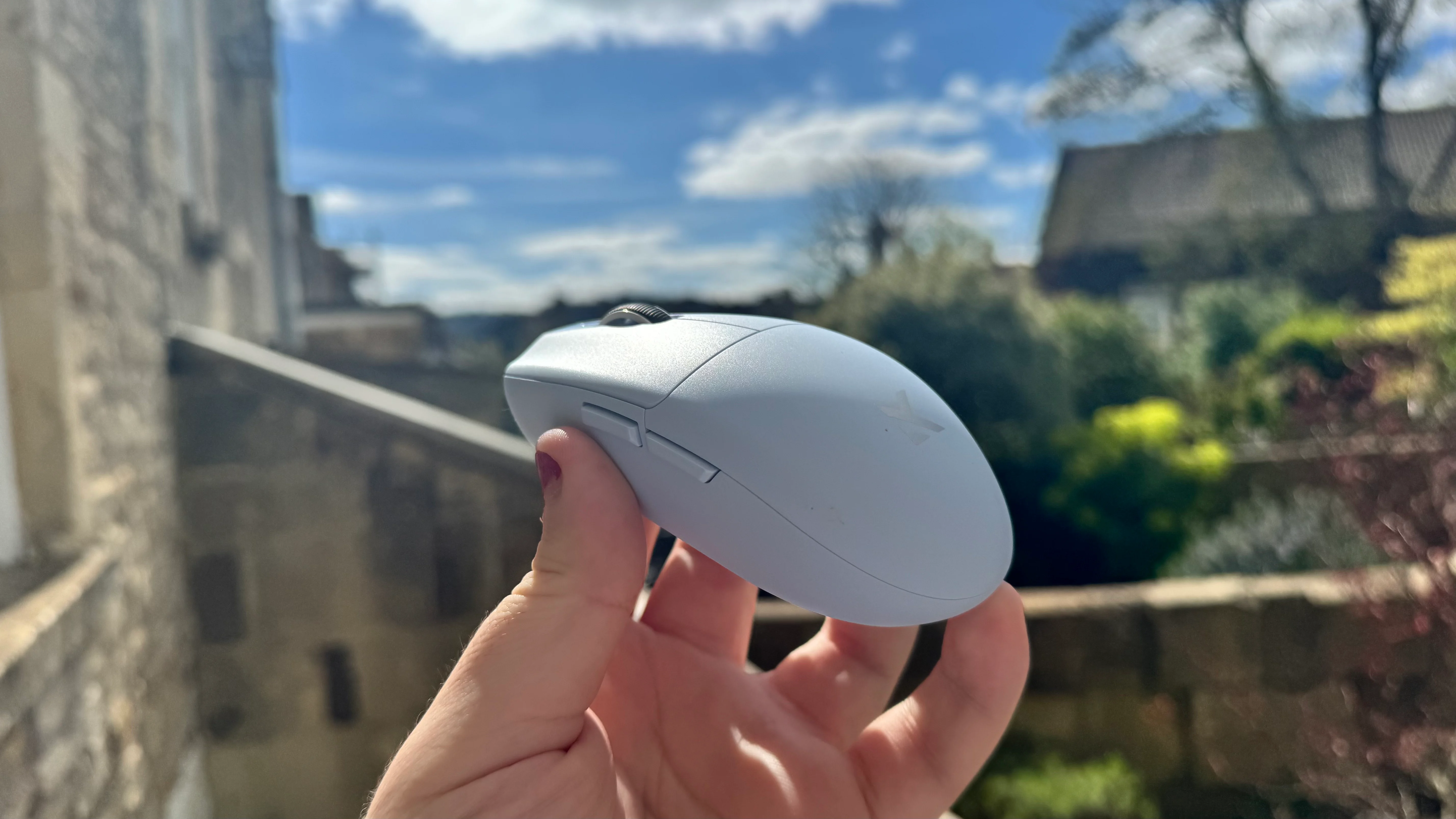
Major brands spent years arguing that lightweight mice required large trade-offs. Enthusiasts got perforated shells, thin plastic, or a hefty bill for something designed to look more exotic than comfortable. Smaller brands took a different route. Some relied on well-designed plastic, some experimented with magnesium alloy, and some cut battery capacity and internal weight aggressively.
Not every result is good. A 35 to 40 gram mouse can look excellent on a product page and then feel fragile, badly balanced, or simply uncomfortable in a larger hand. Low weight is not a substitute for ergonomics. Even so, the competition changed expectations: a company releasing a 70 gram mouse without a clear reason now needs to explain what the buyer receives in return.
That is healthy. The market stopped treating low weight as a niche obsession and started treating it as a normal part of the value discussion. Nobody needs a 35 gram mouse, but everyone can ask why a competing shell weighs twice as much.
The largest difference is still the final price
Direct-to-consumer sales remove some costs along the way. A brand selling through its own store or a marketplace does not have to share the same distributor and retail chain as a company sitting in major stores. It also does not carry the same level of esports deals, campaigns, and global marketing. That can create a much cheaper product, but it does not mean a $40 mouse is free to make or that every expensive brand is cheating the buyer.
European buyers need to include VAT, import cost, shipping time, and returns. A very cheap mouse in China does not always remain the deal of the year once those factors arrive. Warranty matters too. Logitech or Razer usually offer a local service route. With a niche brand, the process may mean email, a video of the fault, a long wait, and sometimes an international return.
The sensible answer is not “always buy Chinese.” Compare final price, return terms, firmware availability, and the specific production revision. A €100 gap is easier to justify as a risk. A €20 gap after tax is a very different calculation.
Quality control and support remain the place where buyers can get burned
Hardware communities keep describing the same pattern. Users praise particular models for price and specifications, then warn about early batches, changing revisions, and uneven support. One person gets a perfectly solid mouse. Another gets a loose side button, uneven clicks, or a receiver that needs a firmware update immediately.
This is not exclusive to Chinese brands. Major companies also ship bad batches. The difference is how much the mistake hurts. A local retailer can often close a warranty claim quickly. A direct purchase can erase its own savings through time and shipping. That is why a niche mouse is not the obvious recommendation for someone who does not want to read revision reports or deal with firmware.
This piece does not replace our comparison of Chinese gaming mice, where the model choice matters more. The larger point here is market pressure: players now have an option they did not have a few years ago, and major brands need to answer it with more than a new name for an old sensor.
The giants have not lost the market. They lost the easy monopoly on “good gear”
Razer, Logitech, and SteelSeries still hold advantages that smaller brands cannot build overnight: broad availability, local support, recognizable shapes, and experience selling worldwide. The issue is that those advantages no longer explain a high price automatically. Players can now see a $50 product with a sensor, weight, and feature set that looked flagship only a few years ago. They rightly ask what exactly the extra $130 pays for.
That question is good for the whole market. It does not destroy the major brands. It forces them to build a better case through fit and finish, support, software, or genuinely original engineering. The logo on its own is no longer enough.
Comments
Discussion
Join the conversation around this story.
Join the discussion
Sign in to comment and reply to other readers.
Sign inNo comments yet
Start the discussion first.