%22%20fill%3D%22rgb(0%2C0%2C0)%22%20d%3D%22M%201708.71%2032.0719%20L%201711.17%2032.1726%20L%201711.48%2033.8726%20C%201698.63%2068.7557%201678.15%20111.062%201663.25%20146.038%20L%201610.27%20270.222%20C%201600.68%20293.044%201548.56%20422.248%201540.04%20431.57%20C%201533.67%20438.547%201128.18%20599.98%201082.51%20618.503%20L%20896.13%20695.087%20C%20861.529%20708.971%20827.042%20723.139%20792.674%20737.591%20C%20773.372%20745.745%20749.086%20754.449%20732.134%20766.537%20C%20692.666%20794.684%20697.752%20841.911%20698.601%20884.356%20C%20699.702%20939.367%20740.841%20953.958%20782.454%20976.677%20L%20861.67%201020.18%20L%201099.89%201152.37%20C%201107.22%201156.5%201119.88%201164.35%201127.14%201167.58%20C%201169.86%201186.61%201146.74%201195.41%201117.9%201208.29%20C%201100.37%201216.11%201079.03%201225.42%201060.64%201233.58%20C%201010.18%201256.26%20959.538%201278.54%20908.726%201300.43%20C%20894.529%201306.71%20881.754%201312.22%20867.258%201317.69%20C%20862.804%201316.04%20858.4%201314.27%20854.051%201312.36%20C%20836.181%201304.32%20811.094%201289.47%20793.048%201279.86%20L%20667.457%201213.33%20L%20559.157%201156.4%20C%20524.558%201137.94%20487.124%201123.47%20472.687%201083.79%20C%20469.558%201074.97%20467.621%201065.77%20466.927%201056.43%20C%20465.765%201038.59%20466.66%201011.98%20466.668%20993.332%20L%20466.359%20873.615%20C%20465.984%20815.652%20463.947%20757.728%20465.485%20699.747%20C%20465.795%20688.052%20466.054%20675.662%20467.175%20664.054%20C%20469.31%20640.858%20475.406%20618.2%20485.2%20597.064%20C%20517.254%20527.676%20568.707%20508.151%20633.929%20480.324%20L%20726.507%20441.167%20L%201040.13%20310.018%20L%201452.31%20137.782%20L%201616.93%2069.4204%20C%201646.93%2057.0612%201678.5%2043.152%201708.71%2032.0719%20z%22%2F%3E%0D%0A%3Cpath%20transform%3D%22translate(0%2C0)%22%20fill%3D%22rgb(0%2C0%2C0)%22%20d%3D%22M%201180.36%20731.182%20C%201195.24%20733.945%201233.7%20756.876%201248.98%20765.026%20L%201364.16%20826.126%20L%201484.37%20889.381%20C%201498.57%20896.955%201532.42%20914.303%201544.52%20923.261%20C%201557.39%20932.823%201567.44%20945.681%201573.6%20960.477%20C%201577.74%20970.613%201580.28%20981.333%201581.12%20992.25%20C%201582.2%201006.88%201581.3%201032.21%201581.31%201047.95%20L%201581.63%201160.97%20C%201582.26%201211.62%201582.57%201262.29%201582.57%201312.95%20C%201582.44%201333.48%201582.84%201362.18%201581%201382.38%20C%201579.14%201403.66%201573.97%201424.53%201565.69%201444.23%20C%201551.08%201479.78%201525.53%201509.75%201492.74%201529.79%20C%201460.17%201549.9%201412.55%201568.06%201376.2%201583.68%20C%201297.89%201617.01%201219.4%201649.9%201140.72%201682.34%20L%20334.313%202018.15%20C%20339.936%202006.05%20344.516%201995.06%20349.5%201982.67%20C%20380.898%201908.42%20413.985%201834.57%20445.11%201760.02%20C%20459.052%201725.94%20473.375%201692.02%20488.076%201658.26%20C%20492.996%201647.05%20502.305%201624.37%20508.527%201614.93%20C%20525.371%201606.59%20557.563%201594.41%20575.732%201586.98%20L%20705.864%201534%20C%20845.58%201478.27%20984.961%201421.71%201124%201364.32%20L%201246.78%201313.94%20C%201290.4%201295.55%201343.27%201280.12%201348.5%201224.17%20C%201350.49%201202.85%201351.54%201164.6%201346.69%201143.96%20C%201344.6%201134.87%201340.77%201126.27%201335.41%201118.63%20C%201321.45%201099.1%201289.07%201084.29%201267.79%201072.67%20L%201188.51%201029.14%20L%20997.495%20923.267%20L%20933.233%20887.54%20C%20924.86%20882.894%20890.238%20867.795%20898.045%20858.391%20C%20907.874%20846.549%20953.243%20829.416%20967.235%20823.263%20L%201064.01%20780.291%20C%201087.5%20769.837%201111.05%20759.524%201134.65%20749.351%20C%201147.99%20743.555%201166.91%20734.741%201180.36%20731.182%20z%22%2F%3E%0D%0A%3C%2Fsvg%3E)
%22%20fill%3D%22rgb(255%2C255%2C255)%22%20d%3D%22M%201708.71%2032.0719%20L%201711.17%2032.1726%20L%201711.48%2033.8726%20C%201698.63%2068.7557%201678.15%20111.062%201663.25%20146.038%20L%201610.27%20270.222%20C%201600.68%20293.044%201548.56%20422.248%201540.04%20431.57%20C%201533.67%20438.547%201128.18%20599.98%201082.51%20618.503%20L%20896.13%20695.087%20C%20861.529%20708.971%20827.042%20723.139%20792.674%20737.591%20C%20773.372%20745.745%20749.086%20754.449%20732.134%20766.537%20C%20692.666%20794.684%20697.752%20841.911%20698.601%20884.356%20C%20699.702%20939.367%20740.841%20953.958%20782.454%20976.677%20L%20861.67%201020.18%20L%201099.89%201152.37%20C%201107.22%201156.5%201119.88%201164.35%201127.14%201167.58%20C%201169.86%201186.61%201146.74%201195.41%201117.9%201208.29%20C%201100.37%201216.11%201079.03%201225.42%201060.64%201233.58%20C%201010.18%201256.26%20959.538%201278.54%20908.726%201300.43%20C%20894.529%201306.71%20881.754%201312.22%20867.258%201317.69%20C%20862.804%201316.04%20858.4%201314.27%20854.051%201312.36%20C%20836.181%201304.32%20811.094%201289.47%20793.048%201279.86%20L%20667.457%201213.33%20L%20559.157%201156.4%20C%20524.558%201137.94%20487.124%201123.47%20472.687%201083.79%20C%20469.558%201074.97%20467.621%201065.77%20466.927%201056.43%20C%20465.765%201038.59%20466.66%201011.98%20466.668%20993.332%20L%20466.359%20873.615%20C%20465.984%20815.652%20463.947%20757.728%20465.485%20699.747%20C%20465.795%20688.052%20466.054%20675.662%20467.175%20664.054%20C%20469.31%20640.858%20475.406%20618.2%20485.2%20597.064%20C%20517.254%20527.676%20568.707%20508.151%20633.929%20480.324%20L%20726.507%20441.167%20L%201040.13%20310.018%20L%201452.31%20137.782%20L%201616.93%2069.4204%20C%201646.93%2057.0612%201678.5%2043.152%201708.71%2032.0719%20z%22%2F%3E%0D%0A%3Cpath%20transform%3D%22translate(0%2C0)%22%20fill%3D%22rgb(255%2C255%2C255)%22%20d%3D%22M%201180.36%20731.182%20C%201195.24%20733.945%201233.7%20756.876%201248.98%20765.026%20L%201364.16%20826.126%20L%201484.37%20889.381%20C%201498.57%20896.955%201532.42%20914.303%201544.52%20923.261%20C%201557.39%20932.823%201567.44%20945.681%201573.6%20960.477%20C%201577.74%20970.613%201580.28%20981.333%201581.12%20992.25%20C%201582.2%201006.88%201581.3%201032.21%201581.31%201047.95%20L%201581.63%201160.97%20C%201582.26%201211.62%201582.57%201262.29%201582.57%201312.95%20C%201582.44%201333.48%201582.84%201362.18%201581%201382.38%20C%201579.14%201403.66%201573.97%201424.53%201565.69%201444.23%20C%201551.08%201479.78%201525.53%201509.75%201492.74%201529.79%20C%201460.17%201549.9%201412.55%201568.06%201376.2%201583.68%20C%201297.89%201617.01%201219.4%201649.9%201140.72%201682.34%20L%20334.313%202018.15%20C%20339.936%202006.05%20344.516%201995.06%20349.5%201982.67%20C%20380.898%201908.42%20413.985%201834.57%20445.11%201760.02%20C%20459.052%201725.94%20473.375%201692.02%20488.076%201658.26%20C%20492.996%201647.05%20502.305%201624.37%20508.527%201614.93%20C%20525.371%201606.59%20557.563%201594.41%20575.732%201586.98%20L%20705.864%201534%20C%20845.58%201478.27%20984.961%201421.71%201124%201364.32%20L%201246.78%201313.94%20C%201290.4%201295.55%201343.27%201280.12%201348.5%201224.17%20C%201350.49%201202.85%201351.54%201164.6%201346.69%201143.96%20C%201344.6%201134.87%201340.77%201126.27%201335.41%201118.63%20C%201321.45%201099.1%201289.07%201084.29%201267.79%201072.67%20L%201188.51%201029.14%20L%20997.495%20923.267%20L%20933.233%20887.54%20C%20924.86%20882.894%20890.238%20867.795%20898.045%20858.391%20C%20907.874%20846.549%20953.243%20829.416%20967.235%20823.263%20L%201064.01%20780.291%20C%201087.5%20769.837%201111.05%20759.524%201134.65%20749.351%20C%201147.99%20743.555%201166.91%20734.741%201180.36%20731.182%20z%22%2F%3E%0D%0A%3C%2Fsvg%3E)

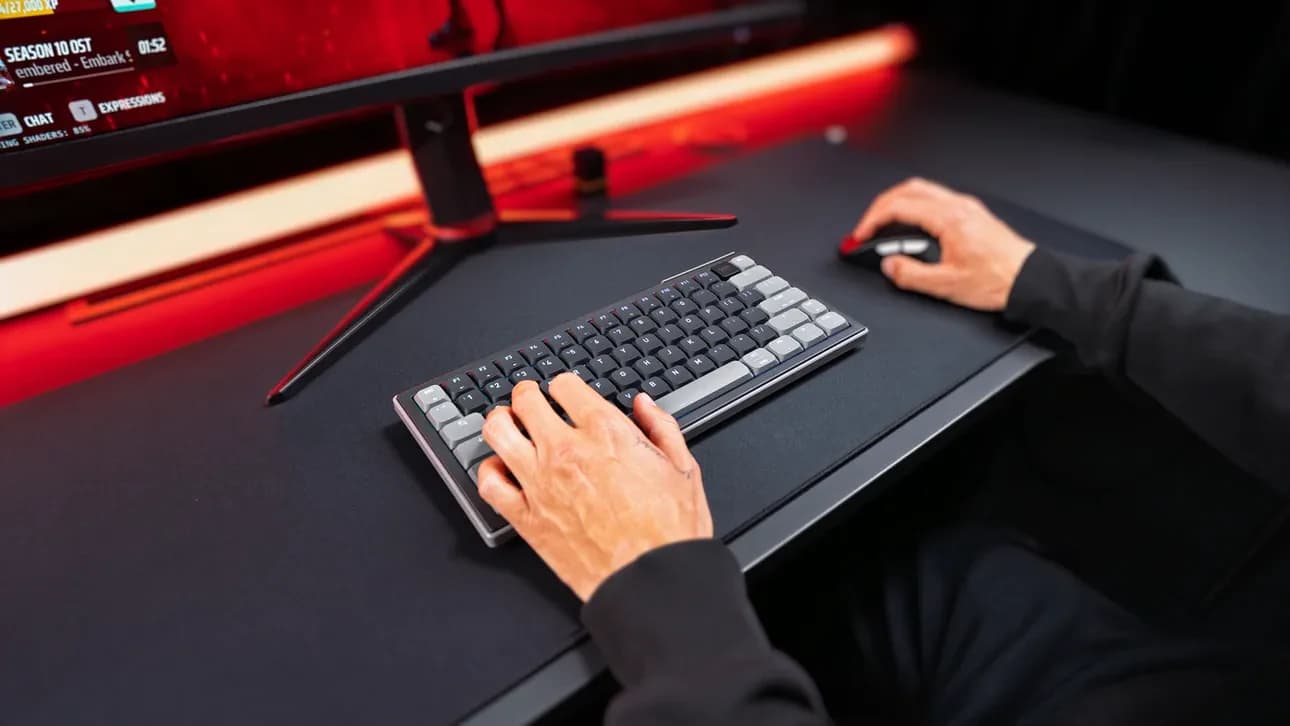
It is genuinely hard to launch a gaming keyboard in 2026 without sounding like everyone else. One brand tweaks polling, another swaps switches, another wraps familiar hardware in a pricier shell and hopes the market mistakes a new name for a new idea. The Cherry XTRFY K63W Pro is one of the few recent keyboard launches that actually deserves a closer look, because the main talking point here is not just cosmetic.
Cherry is pitching this as the first wireless gaming keyboard with 8K polling over Ultra-Wideband. That matters more than the headline number by itself. On a keyboard, 8,000 Hz alone is easy to overhype. What is more interesting is the transport layer underneath it. If UWB really gives this board a cleaner, more stable low-latency wireless connection than the usual crowded 2.4 GHz approach, then Cherry is pushing on a real problem rather than inventing one for the box art.
The real story is UWB, not just the 8K badge
The easiest mistake is to stare at the 8K label and stop there. Honestly, on a keyboard that number alone does not impress me the way it does on a mouse. What matters more is how reliable the board feels in a messy real-world wireless setup, whether input stays consistent, and whether the connection remains stable when the desk is already full of other signals. That is where Cherry’s pitch becomes more interesting.
Ultra-Wideband is supposed to work over shorter ranges but with tighter signal control and less vulnerability to the usual wireless clutter. That makes a lot of sense for a gaming desk. A mouse, a headset, a phone, Bluetooth noise, routers nearby, and whatever else is happening in the room can all turn “fast wireless” into a less tidy promise than the marketing implies. If Cherry’s implementation is as clean as the company claims, that could matter more than the raw 8,000 Hz number itself.
TechRadar picked up on something important here: this feels closer to the logic of high-end controller connectivity than the usual “we made 2.4 GHz even faster” pitch. That is a much better angle, in my view. The keyboard market has already gone through plenty of spec-sheet flexing that looked impressive in a headline but changed very little once the board actually landed on a desk.
Seventy percent is a smart call
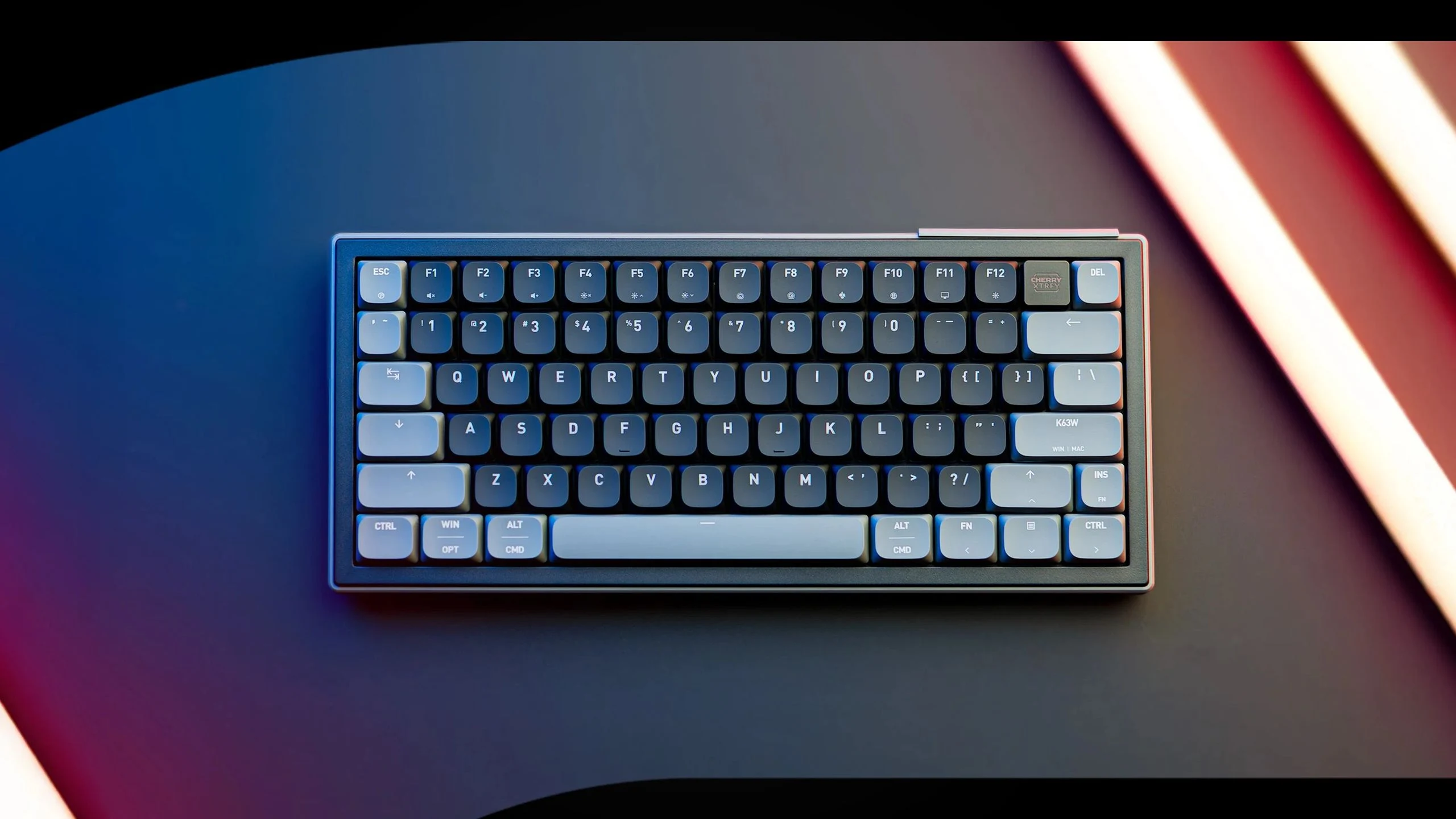
The second thing I like is the format. A 70 percent layout does not get the same attention as endless 60 percent launches, but in day-to-day use it often makes far more sense. You still reclaim desk space for your mouse, you still get the tighter footprint that competitive players want, and you do not immediately slam into compromise every time you step outside a match.
That matters because too many gaming keyboards are still designed as if their owners only exist inside the round timer of a shooter. Real desks do more than that. Chat, work, editing, browsing, and ordinary use all expose whether a compact keyboard is cleverly reduced or simply starved. The K63W Pro looks much closer to the first category.
Low profile plus gasket is more interesting than it sounds
Cherry paired MX Low Profile 2.0 switches with a gasket-mounted structure, and that combination is more thoughtful than the usual gaming-board formula. Low-profile hardware tends to feel more direct and efficient under the fingers. Gasket mounting can soften some of the harshness, tame impact, and make the board less brutally rigid than a lot of traditional gaming chassis.
That gives the K63W Pro a chance to be useful outside of games as well. That is a meaningful advantage. A lot of gaming keyboards win one very narrow scenario and become exhausting the moment you try to live with them for anything else. Cherry at least appears to understand that a board can chase speed without feeling cheap or punishing.
PC Gamer also made a good point about the overall vibe of the device. This does not look like another keyboard trying too hard to cosplay as a pro-player accessory. There is still clear gaming intent, but the product feels more composed. That is a good sign. The market has spent long enough equating aggression with quality.
Not everything here is automatically a win
The most obvious caveat is also the biggest one: 8K on a keyboard is not the same kind of breakthrough that 8K can be on a mouse. I do not want to pretend the average player is going to feel a dramatic before-and-after moment just because the polling figure went up. On a keyboard, the gain is much more about consistency, transport stability, and eliminating small wireless uncertainties than about a flashy sensation of speed.
Battery life is the second pressure point. Cherry quotes figures up to 110 hours, but numbers like that almost always depend on restrained settings rather than the most aggressive use case. If buyers run the board hard, push its wireless mode, and keep the rest of the experience tuned for daily gaming instead of maximum endurance, reality will come down from the headline. That is not a scandal. It is just how these products work. The industry would be healthier if it admitted that more plainly.
Then there is price. A fresh wireless stack, 8K over UWB, Cherry’s own low-profile switch ecosystem, and a new chassis direction are not going to land in budget territory. If the K63W Pro enters high, and all signs suggest it will, then the comparison set becomes uncomfortable fast. Magnetic boards, high-end 75 percent customs with gamer-friendly tuning, and established enthusiast favorites are all waiting in that price range.
At least it is not another Wooting clone
And that is good news. The keyboard market has leaned so hard into one narrative that it can feel as if every serious gaming board must now be magnetic, analog, and wrapped around some version of Rapid Trigger. Cherry is taking a different road. It is not pretending that the K63W Pro solves exactly the same problems. Instead it is offering a very fast wireless low-profile board built around transmission quality, compact size, and a more practical desk footprint.
For some buyers, that may actually be the more useful proposition. Not everyone wants to relearn switch feel, chase magnetic tuning, or buy into a feature set designed around one specific style of play. A keyboard can be modern without trying to become the same product as every headline magnet in the market.
Who this keyboard actually makes sense for
I see three obvious groups. First, players who want a genuinely cleaner wireless setup without accepting mushy “good enough” connectivity. Second, people who already know they like low-profile boards and have no desire to move back to a taller, heavier typing posture. Third, users who are simply tired of the way many gaming keyboards still cut corners while pretending their wireless performance is already solved.
On the other hand, if somebody is shopping almost exclusively for magnetic-switch features, custom actuation behavior, or heavy Rapid Trigger use in competitive shooters, then the value equation becomes more complicated. The K63W Pro has to justify itself through a different set of strengths. It can do that, but it is not the same pitch.
The software layer matters more than the launch headline
It is easy to get distracted by the wireless stack and the hardware format, then forget the thing users will keep touching long after the launch cycle ends. The software matters. A great connection does not save a keyboard if profiles are clumsy, firmware updates feel risky, macros are half-finished, or the control suite still behaves like a leftover from a previous decade. If Cherry wants to sell the K63W Pro as a modern high-end platform, the support layer has to feel just as contemporary as the radio story.
This is one of the keyboard market’s most common failures. Hardware keeps getting better while the software keeps lagging behind it. That is why real post-launch testing will matter more than the Computex pitch. A board in this class cannot afford to be impressive only at the physical layer.
The most interesting outcome is also the healthiest one
If Cherry really delivers unusually stable wireless behavior here, it opens a useful second path for the market. Not every serious gaming keyboard would need to chase the same magnetic-switch narrative. A product could justify itself through better transmission, cleaner desk behavior, and more balanced everyday use instead of only through actuation gimmicks and esports shorthand. That would be good for buyers as much as for competition.
If the UWB story ends up being more headline than advantage, the market will expose that quickly too. Gamers will forgive a high price when the difference is obvious. They are much less tolerant when the expensive part of the pitch is difficult to feel outside of a spec sheet. The K63W Pro sits exactly on that line, which is why it is such an interesting launch to watch.
It also arrives at a useful moment for Cherry
The brand is stepping into a market that has become weirdly predictable. Magnetic boards dominate the conversation, a lot of wireless gaming keyboards still feel half-solved, and many launches are separated by branding more than by actual product direction. That gives Cherry an opening. A board does not have to win the same fight as every other headline product if it can make a different part of the desk experience feel obviously better.
That does not guarantee success, but it does make the K63W Pro easier to care about than another routine refresh. There is at least a real thesis behind it. That alone puts it ahead of a long list of keyboards that never move beyond recycled talking points and a new SKU number.
The early impression is strong, but the real test comes after launch
Cherry has done something fresh. That already puts the K63W Pro ahead of a large portion of the market that keeps repainting the same idea and calling it a new season. But two questions still matter more than the press headline. How well does the UWB system behave on a normal crowded desk, and does the board actually feel good enough in daily use to justify its positioning once the novelty wears off?
If the answer to both is yes, the K63W Pro could end up being one of the more interesting keyboard launches of 2026. If not, then it becomes a clever announcement built around a very good headline. That is not worthless, but it is not enough for a product that clearly wants to be taken more seriously than a Computex curiosity.
Comments
Discussion
Join the conversation around this story.
Join the discussion
Sign in to comment and reply to other readers.
Sign inNo comments yet
Start the discussion first.