%22%20fill%3D%22rgb(0%2C0%2C0)%22%20d%3D%22M%201708.71%2032.0719%20L%201711.17%2032.1726%20L%201711.48%2033.8726%20C%201698.63%2068.7557%201678.15%20111.062%201663.25%20146.038%20L%201610.27%20270.222%20C%201600.68%20293.044%201548.56%20422.248%201540.04%20431.57%20C%201533.67%20438.547%201128.18%20599.98%201082.51%20618.503%20L%20896.13%20695.087%20C%20861.529%20708.971%20827.042%20723.139%20792.674%20737.591%20C%20773.372%20745.745%20749.086%20754.449%20732.134%20766.537%20C%20692.666%20794.684%20697.752%20841.911%20698.601%20884.356%20C%20699.702%20939.367%20740.841%20953.958%20782.454%20976.677%20L%20861.67%201020.18%20L%201099.89%201152.37%20C%201107.22%201156.5%201119.88%201164.35%201127.14%201167.58%20C%201169.86%201186.61%201146.74%201195.41%201117.9%201208.29%20C%201100.37%201216.11%201079.03%201225.42%201060.64%201233.58%20C%201010.18%201256.26%20959.538%201278.54%20908.726%201300.43%20C%20894.529%201306.71%20881.754%201312.22%20867.258%201317.69%20C%20862.804%201316.04%20858.4%201314.27%20854.051%201312.36%20C%20836.181%201304.32%20811.094%201289.47%20793.048%201279.86%20L%20667.457%201213.33%20L%20559.157%201156.4%20C%20524.558%201137.94%20487.124%201123.47%20472.687%201083.79%20C%20469.558%201074.97%20467.621%201065.77%20466.927%201056.43%20C%20465.765%201038.59%20466.66%201011.98%20466.668%20993.332%20L%20466.359%20873.615%20C%20465.984%20815.652%20463.947%20757.728%20465.485%20699.747%20C%20465.795%20688.052%20466.054%20675.662%20467.175%20664.054%20C%20469.31%20640.858%20475.406%20618.2%20485.2%20597.064%20C%20517.254%20527.676%20568.707%20508.151%20633.929%20480.324%20L%20726.507%20441.167%20L%201040.13%20310.018%20L%201452.31%20137.782%20L%201616.93%2069.4204%20C%201646.93%2057.0612%201678.5%2043.152%201708.71%2032.0719%20z%22%2F%3E%0D%0A%3Cpath%20transform%3D%22translate(0%2C0)%22%20fill%3D%22rgb(0%2C0%2C0)%22%20d%3D%22M%201180.36%20731.182%20C%201195.24%20733.945%201233.7%20756.876%201248.98%20765.026%20L%201364.16%20826.126%20L%201484.37%20889.381%20C%201498.57%20896.955%201532.42%20914.303%201544.52%20923.261%20C%201557.39%20932.823%201567.44%20945.681%201573.6%20960.477%20C%201577.74%20970.613%201580.28%20981.333%201581.12%20992.25%20C%201582.2%201006.88%201581.3%201032.21%201581.31%201047.95%20L%201581.63%201160.97%20C%201582.26%201211.62%201582.57%201262.29%201582.57%201312.95%20C%201582.44%201333.48%201582.84%201362.18%201581%201382.38%20C%201579.14%201403.66%201573.97%201424.53%201565.69%201444.23%20C%201551.08%201479.78%201525.53%201509.75%201492.74%201529.79%20C%201460.17%201549.9%201412.55%201568.06%201376.2%201583.68%20C%201297.89%201617.01%201219.4%201649.9%201140.72%201682.34%20L%20334.313%202018.15%20C%20339.936%202006.05%20344.516%201995.06%20349.5%201982.67%20C%20380.898%201908.42%20413.985%201834.57%20445.11%201760.02%20C%20459.052%201725.94%20473.375%201692.02%20488.076%201658.26%20C%20492.996%201647.05%20502.305%201624.37%20508.527%201614.93%20C%20525.371%201606.59%20557.563%201594.41%20575.732%201586.98%20L%20705.864%201534%20C%20845.58%201478.27%20984.961%201421.71%201124%201364.32%20L%201246.78%201313.94%20C%201290.4%201295.55%201343.27%201280.12%201348.5%201224.17%20C%201350.49%201202.85%201351.54%201164.6%201346.69%201143.96%20C%201344.6%201134.87%201340.77%201126.27%201335.41%201118.63%20C%201321.45%201099.1%201289.07%201084.29%201267.79%201072.67%20L%201188.51%201029.14%20L%20997.495%20923.267%20L%20933.233%20887.54%20C%20924.86%20882.894%20890.238%20867.795%20898.045%20858.391%20C%20907.874%20846.549%20953.243%20829.416%20967.235%20823.263%20L%201064.01%20780.291%20C%201087.5%20769.837%201111.05%20759.524%201134.65%20749.351%20C%201147.99%20743.555%201166.91%20734.741%201180.36%20731.182%20z%22%2F%3E%0D%0A%3C%2Fsvg%3E)
%22%20fill%3D%22rgb(255%2C255%2C255)%22%20d%3D%22M%201708.71%2032.0719%20L%201711.17%2032.1726%20L%201711.48%2033.8726%20C%201698.63%2068.7557%201678.15%20111.062%201663.25%20146.038%20L%201610.27%20270.222%20C%201600.68%20293.044%201548.56%20422.248%201540.04%20431.57%20C%201533.67%20438.547%201128.18%20599.98%201082.51%20618.503%20L%20896.13%20695.087%20C%20861.529%20708.971%20827.042%20723.139%20792.674%20737.591%20C%20773.372%20745.745%20749.086%20754.449%20732.134%20766.537%20C%20692.666%20794.684%20697.752%20841.911%20698.601%20884.356%20C%20699.702%20939.367%20740.841%20953.958%20782.454%20976.677%20L%20861.67%201020.18%20L%201099.89%201152.37%20C%201107.22%201156.5%201119.88%201164.35%201127.14%201167.58%20C%201169.86%201186.61%201146.74%201195.41%201117.9%201208.29%20C%201100.37%201216.11%201079.03%201225.42%201060.64%201233.58%20C%201010.18%201256.26%20959.538%201278.54%20908.726%201300.43%20C%20894.529%201306.71%20881.754%201312.22%20867.258%201317.69%20C%20862.804%201316.04%20858.4%201314.27%20854.051%201312.36%20C%20836.181%201304.32%20811.094%201289.47%20793.048%201279.86%20L%20667.457%201213.33%20L%20559.157%201156.4%20C%20524.558%201137.94%20487.124%201123.47%20472.687%201083.79%20C%20469.558%201074.97%20467.621%201065.77%20466.927%201056.43%20C%20465.765%201038.59%20466.66%201011.98%20466.668%20993.332%20L%20466.359%20873.615%20C%20465.984%20815.652%20463.947%20757.728%20465.485%20699.747%20C%20465.795%20688.052%20466.054%20675.662%20467.175%20664.054%20C%20469.31%20640.858%20475.406%20618.2%20485.2%20597.064%20C%20517.254%20527.676%20568.707%20508.151%20633.929%20480.324%20L%20726.507%20441.167%20L%201040.13%20310.018%20L%201452.31%20137.782%20L%201616.93%2069.4204%20C%201646.93%2057.0612%201678.5%2043.152%201708.71%2032.0719%20z%22%2F%3E%0D%0A%3Cpath%20transform%3D%22translate(0%2C0)%22%20fill%3D%22rgb(255%2C255%2C255)%22%20d%3D%22M%201180.36%20731.182%20C%201195.24%20733.945%201233.7%20756.876%201248.98%20765.026%20L%201364.16%20826.126%20L%201484.37%20889.381%20C%201498.57%20896.955%201532.42%20914.303%201544.52%20923.261%20C%201557.39%20932.823%201567.44%20945.681%201573.6%20960.477%20C%201577.74%20970.613%201580.28%20981.333%201581.12%20992.25%20C%201582.2%201006.88%201581.3%201032.21%201581.31%201047.95%20L%201581.63%201160.97%20C%201582.26%201211.62%201582.57%201262.29%201582.57%201312.95%20C%201582.44%201333.48%201582.84%201362.18%201581%201382.38%20C%201579.14%201403.66%201573.97%201424.53%201565.69%201444.23%20C%201551.08%201479.78%201525.53%201509.75%201492.74%201529.79%20C%201460.17%201549.9%201412.55%201568.06%201376.2%201583.68%20C%201297.89%201617.01%201219.4%201649.9%201140.72%201682.34%20L%20334.313%202018.15%20C%20339.936%202006.05%20344.516%201995.06%20349.5%201982.67%20C%20380.898%201908.42%20413.985%201834.57%20445.11%201760.02%20C%20459.052%201725.94%20473.375%201692.02%20488.076%201658.26%20C%20492.996%201647.05%20502.305%201624.37%20508.527%201614.93%20C%20525.371%201606.59%20557.563%201594.41%20575.732%201586.98%20L%20705.864%201534%20C%20845.58%201478.27%20984.961%201421.71%201124%201364.32%20L%201246.78%201313.94%20C%201290.4%201295.55%201343.27%201280.12%201348.5%201224.17%20C%201350.49%201202.85%201351.54%201164.6%201346.69%201143.96%20C%201344.6%201134.87%201340.77%201126.27%201335.41%201118.63%20C%201321.45%201099.1%201289.07%201084.29%201267.79%201072.67%20L%201188.51%201029.14%20L%20997.495%20923.267%20L%20933.233%20887.54%20C%20924.86%20882.894%20890.238%20867.795%20898.045%20858.391%20C%20907.874%20846.549%20953.243%20829.416%20967.235%20823.263%20L%201064.01%20780.291%20C%201087.5%20769.837%201111.05%20759.524%201134.65%20749.351%20C%201147.99%20743.555%201166.91%20734.741%201180.36%20731.182%20z%22%2F%3E%0D%0A%3C%2Fsvg%3E)

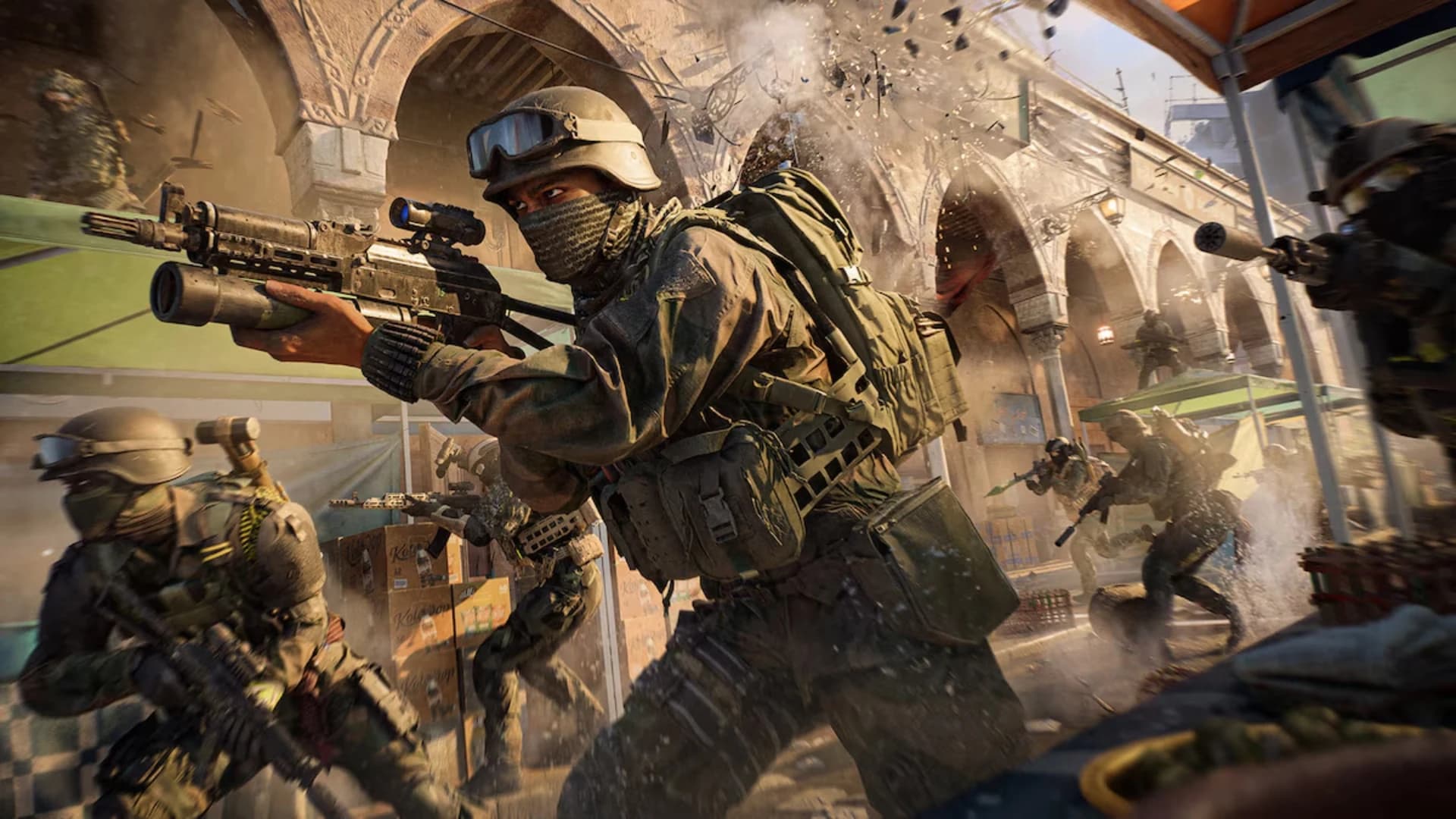
DICE is preparing a major gunplay rework for Battlefield 6, and the news lands as both a welcome correction and a late admission that something fundamental was off. According to the PC Gamer report, update 1.3.3 is set to reduce random bullet deviation, make recoil more readable, introduce limb damage, and sharpen weapon identity. On paper, that sounds like exactly the sort of update a troubled shooter needs. It also sounds like the kind of design foundation the game should have shipped with. The cleanest thesis is therefore simple: DICE is finally addressing the right problem, but it is doing so later than it should have.
That is not nitpicking. Battlefield can survive a lot of rough edges if the act of shooting feels trustworthy. It can survive uneven menus, balance turbulence, even some technical instability if the relationship between the player and the weapon feels coherent. Once that relationship becomes vague, every other problem gets heavier. That is why the gunplay discussion refused to disappear. Players were not mainly complaining about a lack of spectacle. They were complaining about a lack of control.
When an FPS announces a major gunplay overhaul months after launch, that is never just an exciting roadmap headline. It is also an acknowledgment that the core loop failed to earn enough trust the first time around.
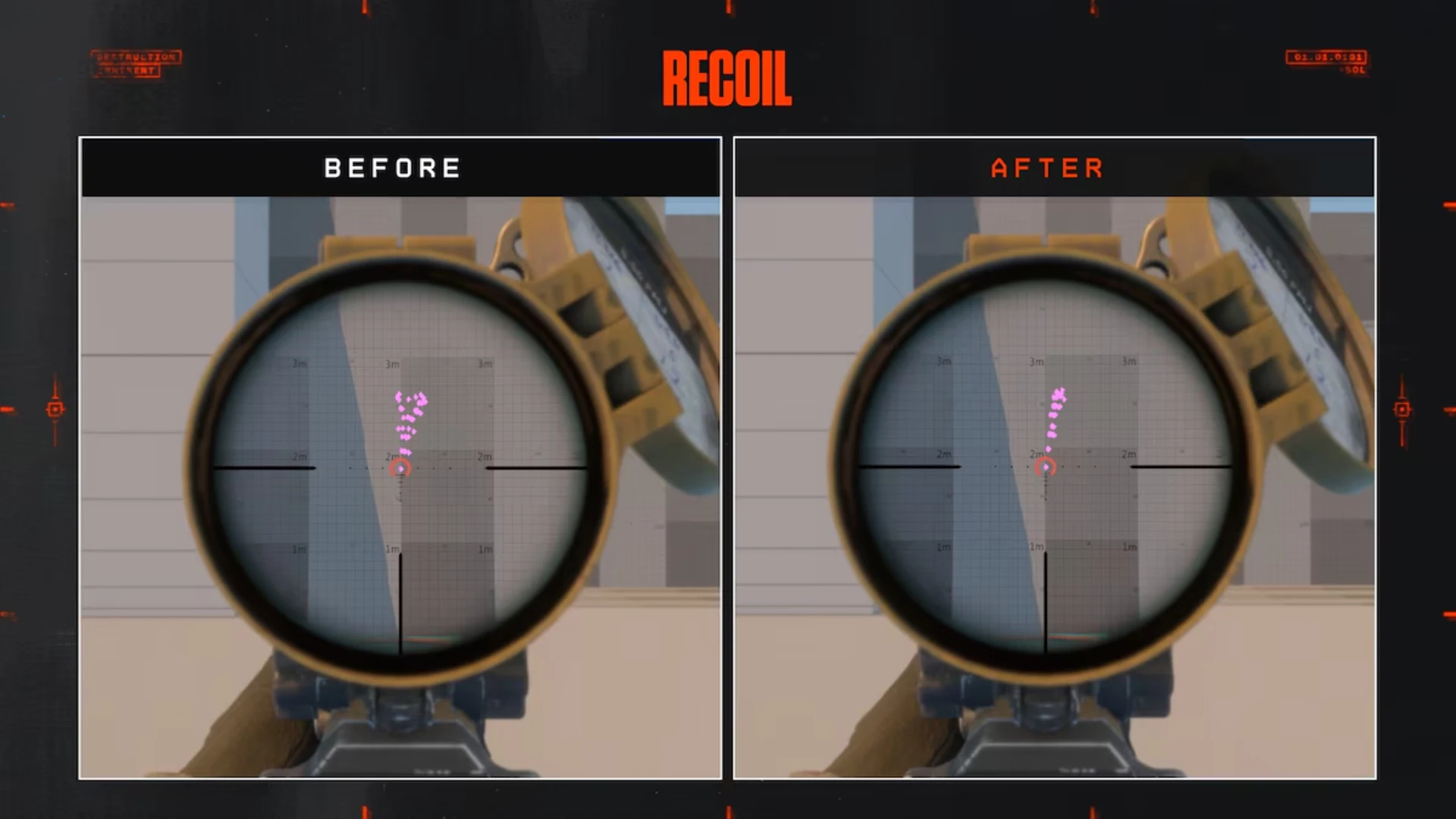
The most important part of this announcement is not the word “overhaul” itself. Games use that word too casually. The important part is what exactly is being touched. If DICE is genuinely reducing random bullet deviation and rebuilding recoil into something more legible, then this is not a cosmetic sweep. It is an attempt to repair the bond between the player and the gun, which is where a shooter either earns loyalty or loses it.
Why players fixated so hard on the shooting
Because in Battlefield, gunplay is not merely one layer among many. It holds the rest together. You can tolerate friction in the interface, an awkward animation here and there, even some launch-era imbalance, if the act of firing a weapon remains satisfying and fair. Once that breaks down, every death begins to feel suspicious. Not because players cannot handle losing, but because they stop feeling a clean connection between movement, aim, and outcome.
That is where random bullet deviation becomes so corrosive. A shooter can have difficult recoil. It can demand muscle memory, discipline, and real practice. That is all defensible. The problem begins when the weapon stops behaving like a system that can be learned and starts behaving like a system that blurs accountability between player input and hidden variance. Players may not always explain that technically, but they sense it almost immediately. They feel when shooting lacks peace.
Battlefield amplifies that problem because the game naturally generates chaos. Large maps, multiple angles, vehicles, verticality, destruction, and mid-range engagements all make the battlefield visually and mechanically noisy. In a game like that, the weapon itself needs to be a stable anchor rather than one more source of doubt. The bigger the battlefield becomes, the more dependable the gun has to feel. If that foundation is missing, everything else starts to sag.
DICE is making the right move, but that does not mean the problem is solved
The biggest mistake after an announcement like this would be assuming that the scale of the changes automatically closes the issue. It does not. In FPS games, you can improve parameters and still fail to improve feel. You can reduce some randomness and still leave a weapon without identity. You can make recoil more readable and still end up with firefights that feel too soft. That is why DICE should be judged harshly, but fairly.
Harshly, because this package of changes is itself evidence that the issue was real. Fairly, because it is still the correct direction. A late repair is better than no repair. The problem is simply that Battlefield 6 is no longer competing for novelty. It is competing to rebuild trust with players who bought into a shooter whose core interaction felt too loose for too long.
That is a much harder phase in a game’s life than launch. At launch, people show up with curiosity. Months later, they come back only if they can see a reason. In a shooter, that reason begins with the weapon itself. Not “better than before.” Good. If update 1.3.3 delivers that, Battlefield can start climbing back. If it only delivers technical improvements without real character, the same argument will return in a week.
Limb damage and weapon identity may matter more than the headlines suggest
In the current discussion, it is easy to focus entirely on random spread and recoil because those are the most combustible phrases. But limb damage and sharper weapon identity may end up doing just as much for the game’s feel. If weapons gain a stronger sense of purpose, players understand much faster why they won or lost a duel. If shots to limbs are handled differently, the rhythm of engagements shifts and positioning choices begin to matter in clearer ways.
That matters because Battlefield was never at its best when it leaned purely on raw mechanical cleanliness like tighter arena-focused shooters do. It was at its best when large-scale combat still met weapons that felt readable and distinct. Players can live with a messy battlefield. They will not tolerate a messy rifle for very long. DICE seems to understand that more clearly now than it did at launch, and that alone makes this update meaningful.
Without that realization, Battlefield 6 would be stuck endlessly adjusting values without improving personality. Numbers without personality rarely build long-term loyalty. Players do not stay because a spreadsheet looks healthier. They stay because the game starts to feel right in the hand.
The awkward truth is that this update changes how people remember launch
There is another layer to this patch, and it is uncomfortable for DICE. Every large post-launch gunplay correction forces players to look backward. The obvious question becomes: if this could be done now, why was the game allowed to release without it? The internal studio answer is always more complex than the community version. Telemetry, balancing, testing, iteration, side effects across the sandbox. All of that is real. But players do not judge the process. They judge the product they were asked to buy.
That is why update 1.3.3 can be both genuinely good for Battlefield 6 and still somewhat costly for its image. Good, because it may meaningfully improve the game. Costly, because it confirms that the community had a legitimate read on the weakness of the original foundation. Not every patch strengthens a brand. Some patches rescue the present while permanently documenting that the past was shakier than the developer wanted to admit.
That does not mean DICE should have avoided touching it. Quite the opposite. It should change whatever needs changing. The point is simply that an honest fix should not be mistaken for a comforting story. That story becomes credible only if players feel the difference inside real matches rather than merely reading a cleaner design philosophy in patch notes.
What this could actually give Battlefield 6
If the update delivers what it promises, Battlefield can recover something more valuable than a temporary spike in interest. It can recover the trust of players who sensed that something in the shooting never quite locked into place and stopped wanting to fight the system. That kind of return matters more than a short wave of positive chatter. A satisfied FPS player returns to routine. A disappointed FPS player logs in for two nights and disappears again.
Battlefield badly needs the first kind of return. Not another brief round of “it seems better,” but an actual restoration of the feeling that the weapons finally have a spine. If update 1.3.3 can do that, Battlefield 6 can stop being a project of constant apologies and start being a shooter people discuss with enthusiasm instead of relief.
The most revealing thing will not be DICE’s presentation. It will be how players talk after a week
Patch notes and official breakdowns are always cleaner than reality. That is why the real test of this update starts only after several days of ordinary play. Do people begin posting clips because gunfights finally feel earned? Does the conversation shift away from spread frustration and toward actual weapon choices, engagement styles, and risk decisions? Those signals will matter more than any polished developer explanation.
In shooters, community language quickly reveals whether a fix was meaningful. If the first week still sounds dominated by excuses about the system, the studio still has a problem. If players begin talking more about their own decisions than about the game’s whims, that usually means the gunplay is moving back toward health. Battlefield 6 needs that shift more than it needs another short-lived burst of goodwill.
This patch also matters because it will shape how the studio is judged next time
This is not only about the current game. Every large correction to a foundational system leaves a mark on the next release as well. If DICE delivers a meaningful improvement here, some players will conclude that the studio can still steer itself back toward the right decisions, even if it gets there late. If it fails, the next Battlefield will launch under a colder assumption: that the real version of the game will not exist until months after release.
That is a larger risk to the brand than one patch cycle. Big series rarely fall apart because of one bad design call. They fall apart when the audience starts believing that every launch is merely an unfinished draft. Update 1.3.3 therefore matters not just as a gunplay repair, but as an attempt to stop a much more dangerous way of thinking about Battlefield itself.
Otherwise even a strong patch starts to look less like mastery and more like debt repayment.


Comments
Discussion
Join the conversation around this story.
Join the discussion
Sign in to comment and reply to other readers.
Sign inNo comments yet
Start the discussion first.